




Introduction – salmon and weight loss
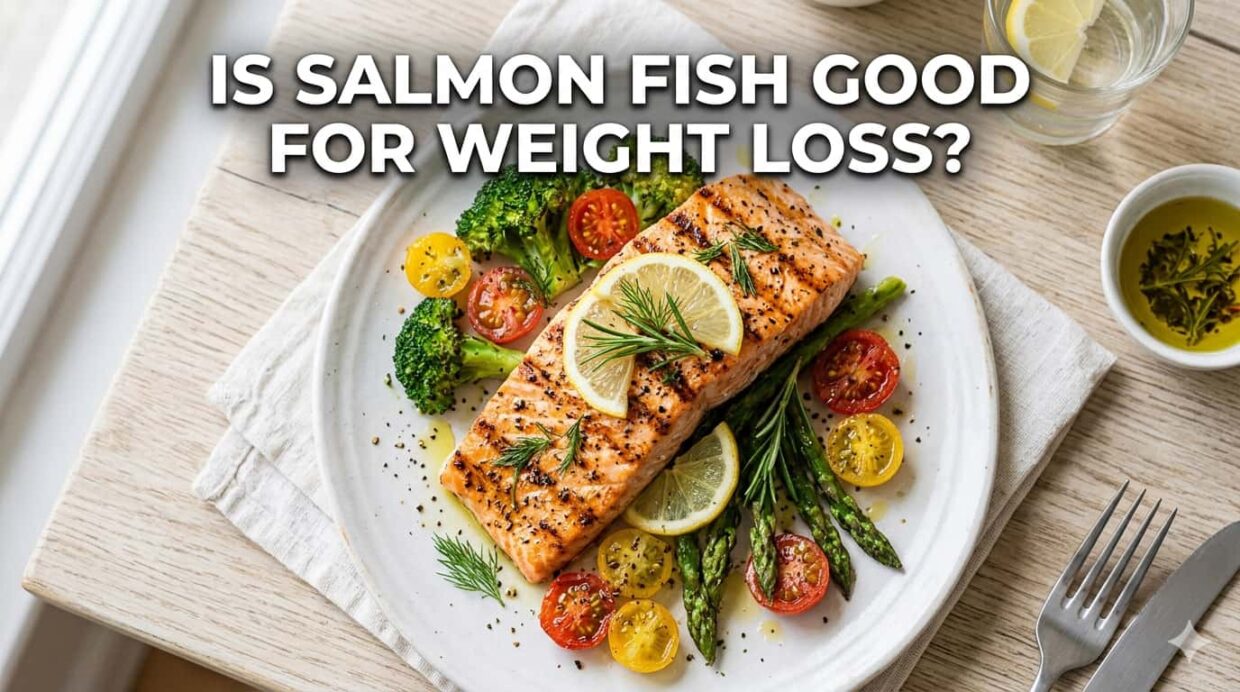
Is salmon fish good for weight loss? If this question has been on your mind, you are not alone. Millions of people searching for effective, sustainable, and delicious ways to shed extra kilos are turning toward one of the world’s most nutrient-dense foods — salmon.
Is salmon good for weight loss?
The short answer is: Yes, salmon is exceptionally good for weight loss. It is loaded with high-quality protein, heart-healthy omega-3 fatty acids, zero carbohydrates, and powerful metabolism-supporting vitamins and minerals. But there is more science behind this than most people realize.
In this complete guide, we will cover everything — from salmon’s full nutritional profile and its proven fat-burning mechanisms to how much to eat, how to cook it, and what to pair it with for maximum weight loss results. Whether you are on a keto diet, Mediterranean diet, or a simple calorie-deficient plan, salmon and weight loss go together better than almost any other food on the planet.
Let’s dive deep.
What Makes Salmon Fish Good for Weight Loss?
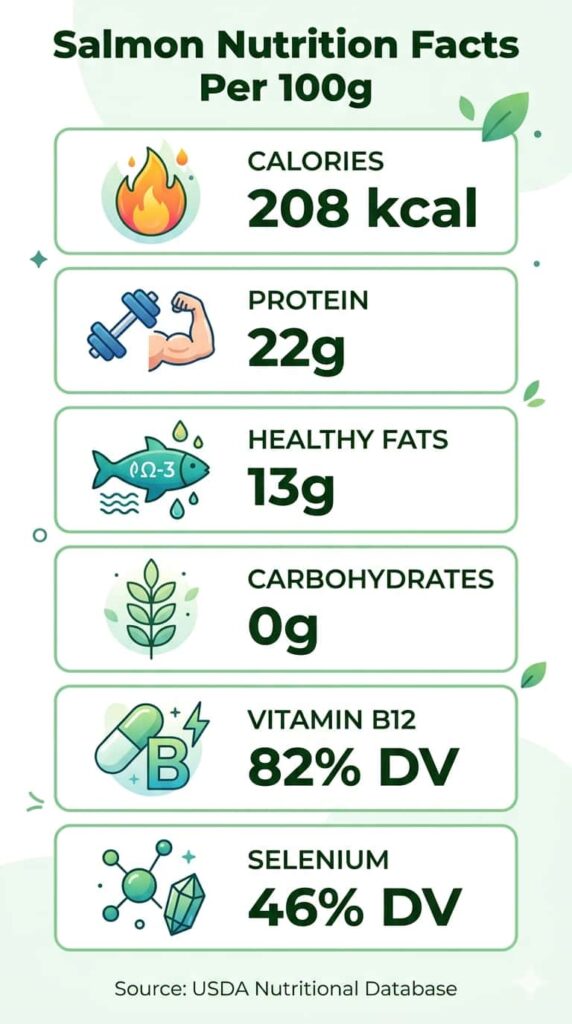
Before exploring the benefits, it is important to understand what is actually inside salmon. A standard 100 g cooked serving of Atlantic salmon provides:
- Calories: ~208 kcal
- Protein: 22 g
- Total Fat: 13 g (mostly healthy unsaturated fats)
- Carbohydrates: 0 g
- Omega-3 Fatty Acids (EPA + DHA): 1.8–2.5 g
- Vitamin B12: 82% of Daily Value
- Selenium: 46% of Daily Value
- Vitamin D: 20–120% of Daily Value (varies by species)
- Potassium: 13% of Daily Value
- Niacin (B3): High amounts
Check Out These Salmon Recipes For a Lean Body
Zero carbs. Zero glycemic index. A protein-to-calorie ratio that competes with lean chicken breast. This is why salmon fish for weight loss is recommended by doctors, dietitians, and weight management experts worldwide.
Is salmon good to lose weight – 7 Proven Reasons
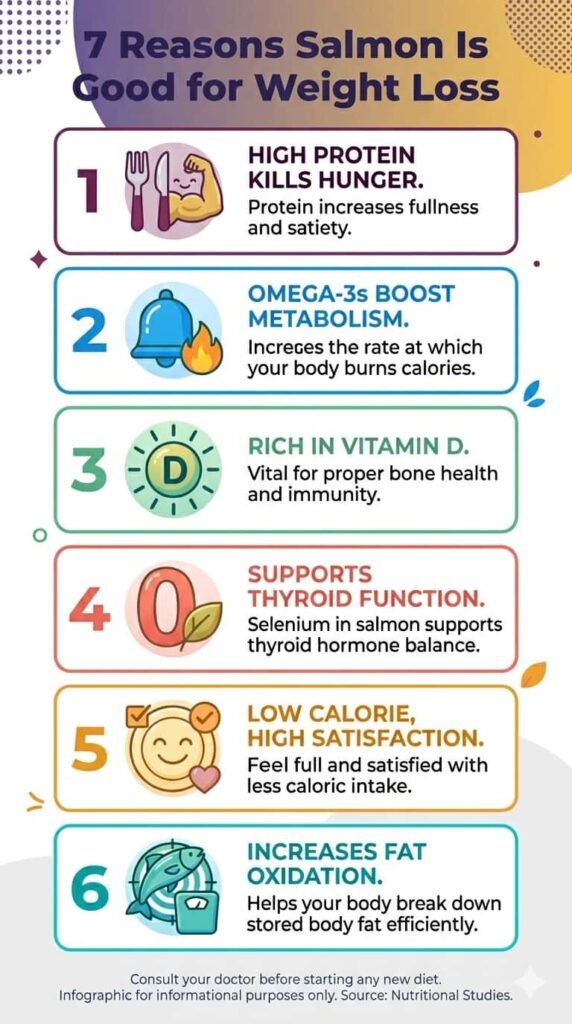
1. High-Quality Protein Kills Hunger and Preserves Muscle
Protein is the single most important macronutrient for weight loss, and salmon delivers 22 g of complete protein per 100 g — meaning it contains all nine essential amino acids your body cannot produce on its own.
Here is why this matters for fat loss: protein suppresses ghrelin (the hunger hormone) and stimulates satiety hormones like peptide YY and GLP-1. Multiple clinical studies confirm that high-protein meals reduce total daily calorie intake without conscious restriction. You simply feel full longer and snack less.
More importantly, when you are in a calorie deficit, your body is at risk of burning muscle along with fat. Salmon’s complete amino acid profile protects lean muscle mass during weight loss — preserving your metabolism so the weight you lose comes from fat, not muscle. This is a critical distinction that many crash dieters overlook.
Also Check: Fast Metabolism Symptoms — 12 Signs of a High Metabolism (2026)
2. Omega-3 Fatty Acids Reduce Fat-Storing Inflammation
This is where salmon and weight loss gets truly interesting. Salmon is one of the richest sources of EPA and DHA — the two most bioavailable and biologically active forms of omega-3 fatty acids. Your body cannot produce these on its own, so dietary intake is essential.
Chronic low-grade inflammation in fat tissue (adipose tissue) is now recognized as a major driver of obesity and metabolic dysfunction. The omega-3s in salmon directly combat this inflammation, making it easier for your body to enter fat-burning mode.
Research also shows that EPA and DHA improve insulin sensitivity. Better insulin sensitivity means your body uses blood glucose more efficiently and stores less of it as fat. A 2025 review of previous research confirmed that omega-3 fatty acids improve lipid levels and reduce inflammation in fat tissue, which otherwise contributes to obesity.
Additionally, early studies suggest omega-3s may specifically target visceral fat — the dangerous deep belly fat surrounding your organs — which is linked to diabetes, heart disease, and metabolic syndrome.
3. The Thermic Effect of Protein Boosts Your Metabolism
Not all calories are burned equally. The thermic effect of food (TEF) is the energy your body uses just to digest and process what you eat. Here is the breakdown:
- Protein: 20–30% thermic effect
- Carbohydrates: 5–10% thermic effect
- Fat: 0–3% thermic effect
Because salmon is primarily protein and healthy fat, your body burns significantly more calories digesting it compared to carbohydrate-heavy meals. Every time you eat salmon, you get a small but meaningful metabolic boost. Over weeks and months, this compounds into a significant calorie deficit advantage.
4. Zero Carbs Means Stable Blood Sugar and Less Fat Storage
Salmon contains zero grams of carbohydrates and has a glycemic index of 0. This is remarkable for a food that is so filling and satisfying.
When you eat high-carbohydrate foods, blood sugar spikes, insulin surges, and any excess glucose gets stored as fat. Salmon produces none of this response. Your blood sugar stays stable, insulin stays low, and your body is free to access stored fat for energy.
This is why salmon fish for weight loss fits perfectly into low-carb diets, ketogenic diets, and any eating plan focused on blood sugar control. It satisfies hunger completely without triggering the insulin-fat-storage cycle.
5. Vitamin D Deficiency Is Linked to Obesity — Salmon Fixes This
Here is a fact that surprises most people: vitamin D deficiency is strongly associated with obesity and difficulty losing weight. Research shows that people with low vitamin D levels tend to store more abdominal fat and have a harder time losing weight even in a calorie deficit.
Salmon is one of the very few food sources that provides significant amounts of vitamin D. Depending on the species, a 6 oz serving of wild salmon can provide between 20% to 120% of the recommended daily intake of vitamin D. Getting adequate vitamin D supports bone health, immune function, and may help optimize the metabolic conditions needed for effective fat loss.
6. Selenium and B12 Support Thyroid Function and Metabolism
Your thyroid gland is the master regulator of your metabolism — it controls how fast or slow your body burns calories at rest. A sluggish thyroid can make weight loss feel impossible even when you are eating well and exercising.
Salmon is extraordinarily rich in selenium (46% daily value per 100 g) and vitamin B12 (82% daily value). Both nutrients are critical for healthy thyroid function. Selenium is required for the conversion of thyroid hormones, while B12 helps your body break down fats and convert food into usable energy.
This is one of the most underappreciated reasons is salmon healthy for weight loss — it actively supports the hormonal machinery that determines your metabolic rate.
7. Low Calorie-to-Satisfaction Ratio Makes Dieting Sustainable
A properly portioned 4 oz (115 g) serving of salmon provides roughly 200–240 calories while delivering enough protein and healthy fat to genuinely satisfy hunger for hours. Compare this to 200 calories of chips, crackers, or white bread — which digest in minutes and leave you hungry and craving more.
Salmon makes calorie-deficit dieting feel less like deprivation and more like a sustainable lifestyle. When you feel satisfied after meals, you are far less likely to binge, snack excessively, or abandon your plan altogether.
Wild Salmon vs. Farmed Salmon for Weight Loss — Which Is Better?
This is one of the most common questions around salmon and weight loss. Here is the honest answer:
Wild-caught salmon is generally leaner, with slightly fewer calories per serving (around 190 kcal per 4 oz vs. 240 kcal for farmed). It tends to have a more pronounced flavor and higher omega-3 concentration relative to total fat.
Farmed salmon is milder in taste, widely available, and more affordable. It has more total fat, but those extra calories come from omega-3 fatty acids — not empty or harmful calories.
The practical difference in a weight loss context is minimal. Over a week of eating salmon twice, the calorie difference between wild and farmed amounts to roughly 100 calories — about one banana. If farmed salmon is what fits your budget and taste preference, eat it consistently. Consistency matters far more than optimization when it comes to salmon fish for weight loss.
How Much Salmon Should You Eat for Weight Loss?
Most leading health organizations, including the American Heart Association and the USDA Dietary Guidelines, recommend eating at least two servings of fatty fish like salmon per week. Each serving is typically 3–4 oz (85–115 g).
For active weight loss, eating salmon 2–3 times per week is a practical and scientifically supported target. This frequency ensures you are meeting your omega-3 needs, maintaining high protein intake, and keeping meal variety enjoyable enough to stick with long-term.
Avoid eating salmon every single day unless you are rotating between wild and farmed varieties and monitoring your overall mercury and sodium intake, particularly with smoked or canned options.
Best Ways to Cook Salmon for Weight Loss
How you prepare salmon determines whether it remains a powerful weight loss food or becomes a calorie bomb. Here are the best and worst methods:
Best cooking methods (diet-friendly):
- Baking — Preheat oven to 200°C. Brush with 1 tsp olive oil, season with herbs and lemon, bake 12–15 minutes. Clean, simple, and delicious.
- Grilling — Preserves omega-3s and adds flavor without added fat. Ideal for maintaining nutritional integrity.
- Air-frying — Produces crispy skin with minimal oil at 190°C for 8–10 minutes.
- Poaching — The lowest-calorie method. Simmer in water, broth, or white wine with aromatics for 10–12 minutes.
- Pan-searing — Use a non-stick pan with 1 tsp oil. Sear skin-side up 3–4 minutes, flip, finish 2–3 minutes. Adds zero excess calories if oil is measured.
Check Out These Salmon Recipes For a Lean Body
Methods to avoid or limit:
- Deep frying — Adds hundreds of empty calories and destroys omega-3s
- Heavy cream sauces — Dramatically increases saturated fat and total calories
- Sugary glazes and teriyaki marinades — Spike blood sugar and cancel the zero-carb benefit of salmon
What to Eat with Salmon for Maximum Weight Loss
Pairing salmon with the right foods amplifies its weight loss effect:
- Non-starchy vegetables (broccoli, asparagus, spinach, zucchini, bell peppers) — Add fiber, volume, and micronutrients with minimal calories
- Leafy green salads — A bed of arugula or mixed greens with lemon dressing keeps the meal light and nutrient-dense
- Legumes (lentils, chickpeas) — Add slow-digesting fiber that further stabilizes blood sugar
- Quinoa or brown rice (small portions) — For those who need complex carbohydrates post-workout
- Avocado — Healthy fat that enhances satiety without spiking blood sugar
Avoid pairing salmon with refined carbohydrates like white pasta, white rice, or sugary sauces if your primary goal is fat loss. These can reduce the metabolic benefits of salmon and destabilize the blood sugar control that makes this fish so powerful for weight management.
Canned and Smoked Salmon for Weight Loss — Are They Good Options?
Canned salmon is just as nutritious as fresh salmon in terms of protein and omega-3 content, and it is significantly more affordable. Wild-caught canned salmon also contains small edible bones that provide calcium. The main caveat is sodium — check labels and choose low-sodium options. Canned salmon is excellent for quick salads, wraps, and grain bowls.
Smoked salmon is convenient and nutritious but typically higher in sodium than fresh. It works well in eggs, salads, and whole-grain toast combinations. Keep portion sizes moderate and be mindful of sodium if you have blood pressure concerns.
Both are legitimate, budget-friendly ways to enjoy salmon fish for weight loss consistently throughout the week.
Is Salmon Healthy for Weight Loss Compared to Other Proteins?
Let’s look at how salmon stacks up:
| Protein Source | Protein (per 100g) | Calories | Omega-3s | Carbs |
|---|---|---|---|---|
| Salmon (wild) | 20 g | 182 kcal | High (1.8g) | 0 g |
| Chicken breast | 26 g | 165 kcal | Negligible | 0 g |
| Eggs (2 large) | 12 g | 143 kcal | Low | 1 g |
| Tofu | 8 g | 76 kcal | Negligible | 2 g |
| Tuna (canned) | 25 g | 130 kcal | Moderate | 0 g |
Chicken breast edges out salmon on protein per calorie, but salmon wins decisively when omega-3s, thyroid-supporting selenium, and anti-inflammatory benefits are factored in. For comprehensive metabolic support during weight loss, salmon is the superior choice.
READ MORE: Lose 10 lbs In 2 Months
Frequently Asked Questions (FAQs)
Q1. Is salmon fish good for weight loss every day?
Eating salmon daily is generally safe for most healthy adults, but nutrition experts recommend 2–3 servings per week to balance omega-3 intake, manage sodium (especially from smoked or canned varieties), and maintain dietary variety. Rotating between wild and farmed salmon while eating it 3 times per week is an excellent approach for sustained salmon and weight loss results.
Q2. Is salmon good for weight loss if I am on a keto diet?
Absolutely. Salmon is one of the most keto-compatible foods available. It contains zero carbohydrates, is rich in healthy fats (including omega-3s), and provides 22 g of protein per 100 g serving. It fits perfectly within keto macros and supports fat-burning by keeping insulin levels low and promoting satiety.
Q3. How much salmon should I eat per week for weight loss?
For salmon fish for weight loss, aim for 2–3 servings per week, with each serving being 3–5 oz (85–140 g). This is consistent with USDA Dietary Guidelines and American Heart Association recommendations, and provides sufficient omega-3 fatty acids and protein to meaningfully support your weight loss goals.
Q4. Is salmon healthy for weight loss even though it contains fat?
Yes. The fat in salmon is predominantly omega-3 polyunsaturated fatty acids (EPA and DHA), which are categorically different from the saturated fats linked to poor health outcomes. Omega-3 fats actively reduce inflammation, improve insulin sensitivity, and may help reduce visceral belly fat. The caloric density is moderate — a 4 oz serving runs 200–240 calories — making salmon a very efficient food for fat loss diets.
Q5. Can salmon and weight loss work together on a budget?
Yes. Frozen salmon provides nearly identical nutrition to fresh salmon at a fraction of the cost. Canned wild-caught salmon is even more affordable and requires no cooking. Both options make salmon fish for weight loss accessible without a premium grocery budget. Consistency over time matters more than always buying fresh wild salmon.
Q6. What is the best time to eat salmon for weight loss?
There is no single “best” time, but eating salmon at lunch or dinner works well for most people. A salmon-based dinner with non-starchy vegetables is particularly effective for weight loss because the high protein and fat content promotes overnight satiety, reduces late-night snacking, and supports muscle protein synthesis during sleep
Q7. Is salmon good for weight loss if I have thyroid issues?
Salmon is often recommended for people with thyroid conditions because of its high selenium and iodine content — both critical for thyroid hormone production and conversion. Since the thyroid regulates metabolic rate, supporting thyroid health with selenium-rich foods like salmon can improve the metabolic conditions needed for effective weight loss. Always consult your doctor about dietary changes if you have diagnosed thyroid disease.
Conclusion
So, is salmon fish good for weight loss? The answer is a clear, science-backed yes.
Salmon is good for weight loss because it delivers a rare combination of complete protein, anti-inflammatory omega-3 fats, thyroid-supporting selenium, metabolism-boosting B12, and zero carbohydrates — all in a single, delicious, versatile food. It controls hunger hormones, preserves lean muscle during calorie deficit, supports healthy blood sugar, and makes sustainable dieting feel satisfying rather than restrictive.
Whether you choose wild or farmed, fresh, frozen, or canned — salmon fish for weight loss works. The key is consistency: aim for 2–3 servings per week, cook it with minimal added fat, pair it with fiber-rich vegetables, and let the nutrition science work in your favor.
Salmon and weight loss are not just compatible — they are one of the most powerful pairings in evidence-based nutrition.
RELATED GUIDES:
Loose Skin After Weight Loss — Causes, Mistakes and What Actually Happens
Metabolism Explained: Types, Rate & How to Boost
What is a safe weight loss per week? Doctor recommended rate
The Complete Weight Loss Guide: What Works and Why
References and Sources
- Healthline — Salmon Nutrition and Health Benefits: https://www.healthline.com/nutrition/salmon-nutrition-and-health-benefits
- GoodRx — Is Salmon Good for Weight Loss?: https://www.goodrx.com/well-being/diet-nutrition/is-salmon-good-for-weight-loss
- Noom — Salmon for Weight Loss (2025): https://www.noom.com/blog/nutrition/salmon-for-weight-loss/
- Wild Alaskan Company — Can Eating More Salmon Help You Lose Weight?: https://wildalaskancompany.com/blog/can-eating-more-salmon-help-you-lose-weight
- MOWI Salmon — Is Salmon Fish Good for Weight Loss?: https://mowisalmon.us/is-salmon-fish-good-for-weight-loss/
- Clean Eatz Kitchen — Is Salmon Good for Weight Loss?: https://www.cleaneatzkitchen.com/a/blog/is-salmon-good-for-weight-loss
- American Tuna — Canned Salmon for Weight Loss: https://americantuna.com/blogs/news/benefits-of-eating-canned-salmon-a-weight-loss-guide
- Juniper — Can Eating Salmon Help You Lose Weight?: https://www.myjuniper.com/blog/can-eating-salmon-help-you-lose-weight
- NIH Office of Dietary Supplements — Omega-3 Fatty Acids: https://ods.od.nih.gov/factsheets/Omega3FattyAcids-HealthProfessional/
- USDA Dietary Guidelines for Americans: https://www.dietaryguidelines.gov
Disclaimer
This content is for informational purposes only and does not substitute professional medical advice. Always consult a qualified healthcare professional for personalized health guidance.
Blog History
This article is regularly reviewed and updated by our medical research team to ensure accuracy, relevance, and evidence-based insights.
Posted On:
Last Updated:

ISSA Certified Personal Trainer | Nutrition Specialist (Boston University)
Naithen Matthews is an ISSA-certified personal trainer and a nutrition graduate from Cornell University, with advanced graduate study (MS and PhD level work) in Nutrition & Metabolism focusing on nutrient metabolism, energy balance, chronic disease mechanisms, and obesity.
With over five years of experience in fitness coaching and more than two years of writing in the health and wellness space, Naithen specializes in metabolism, women’s health, weight management, and natural wellness. He is passionate about turning complex science into clear, practical guidance that anyone can understand.
Naithen’s work reflects strong E-E-A-T principles, combining real-world coaching experience with evidence-based nutrition knowledge to help readers make safe, informed, and confident health decisions.

Robert Harisson
ISSA Certified Personal Trainer | Nutrition Specialist (Cornell University)
Robert Harrison is an ISSA-certified personal trainer and a nutrition graduate from Cornell University. With over five years of fitness coaching and two years of health-blog writing, he specializes in metabolism, women’s health, weight management, and natural wellness. Robert creates simple, science-backed content that helps readers make safe and informed decisions. His work reflects strong E-E-A-T principles, combining real-world coaching experience with evidence-based nutrition knowledge.


Leave feedback about this