




Brown fat, also known as brown adipose tissue, is a unique type of body fat that plays an active role in metabolism rather than simply storing energy. Unlike most fat in the body, brown fat helps burn calories by producing heat, a process that supports temperature regulation and overall metabolic function. Because of this, learning how to activate brown fat naturally has become an important focus in metabolic and obesity-related research.
Although brown fat is most abundant in infants, adults also retain small amounts that can influence how efficiently the body uses energy. Research has shown that brown fat can take up glucose and fatty acids to generate heat, linking it to improved metabolic efficiency and better blood sugar control. For this reason, scientists often describe brown fat as metabolically beneficial compared to energy-storing white fat.
Understanding how to activate brown fat naturally, how it works, and what role it plays in weight management helps separate scientific evidence from popular myths. This article explores the function of brown fat, explains why it is sometimes called “good fat,” and clarifies its realistic impact on metabolism and weight loss.
Read More: Brown fat vs white fat
What Is Brown Fat?
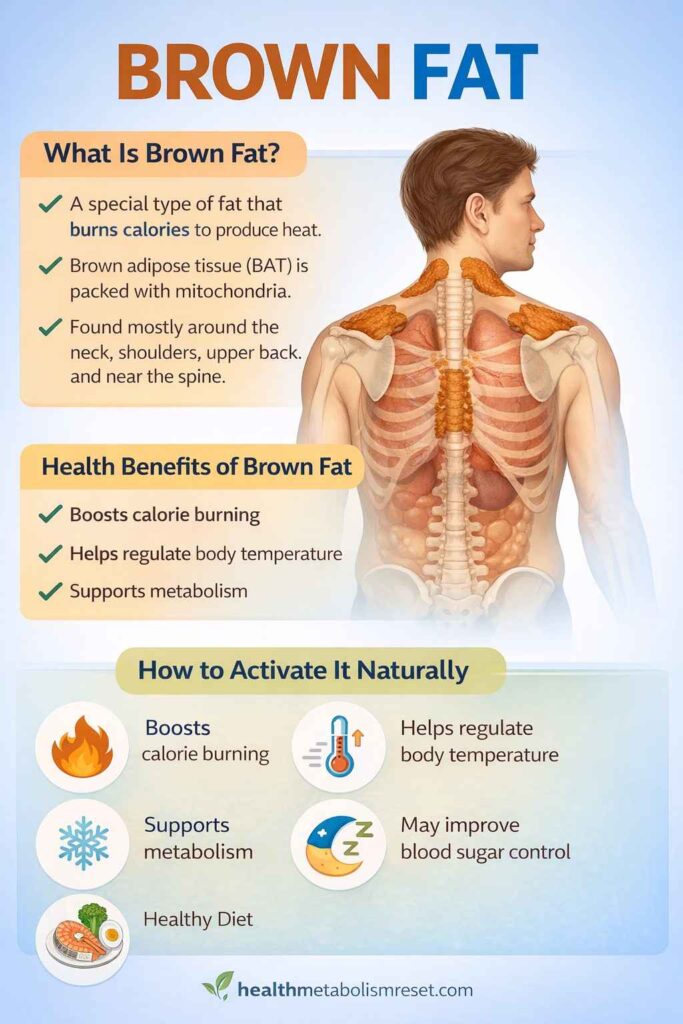
Brown fat, or brown adipose tissue, is a specialized type of body fat that actively supports metabolism by burning calories to produce heat. Unlike white fat, which mainly stores energy, brown fat helps maintain body temperature and energy balance. Learning how to activate brown fat naturally can enhance its calorie-burning and metabolic effects (National Institutes of Health).
Brown fat is rich in mitochondria, the parts of cells responsible for energy production. These mitochondria contain iron-rich proteins that give brown fat its darker color and allow it to convert stored energy directly into heat, a process called thermogenesis. This makes brown fat metabolically active rather than just an energy storage tissue (Cleveland Clinic).
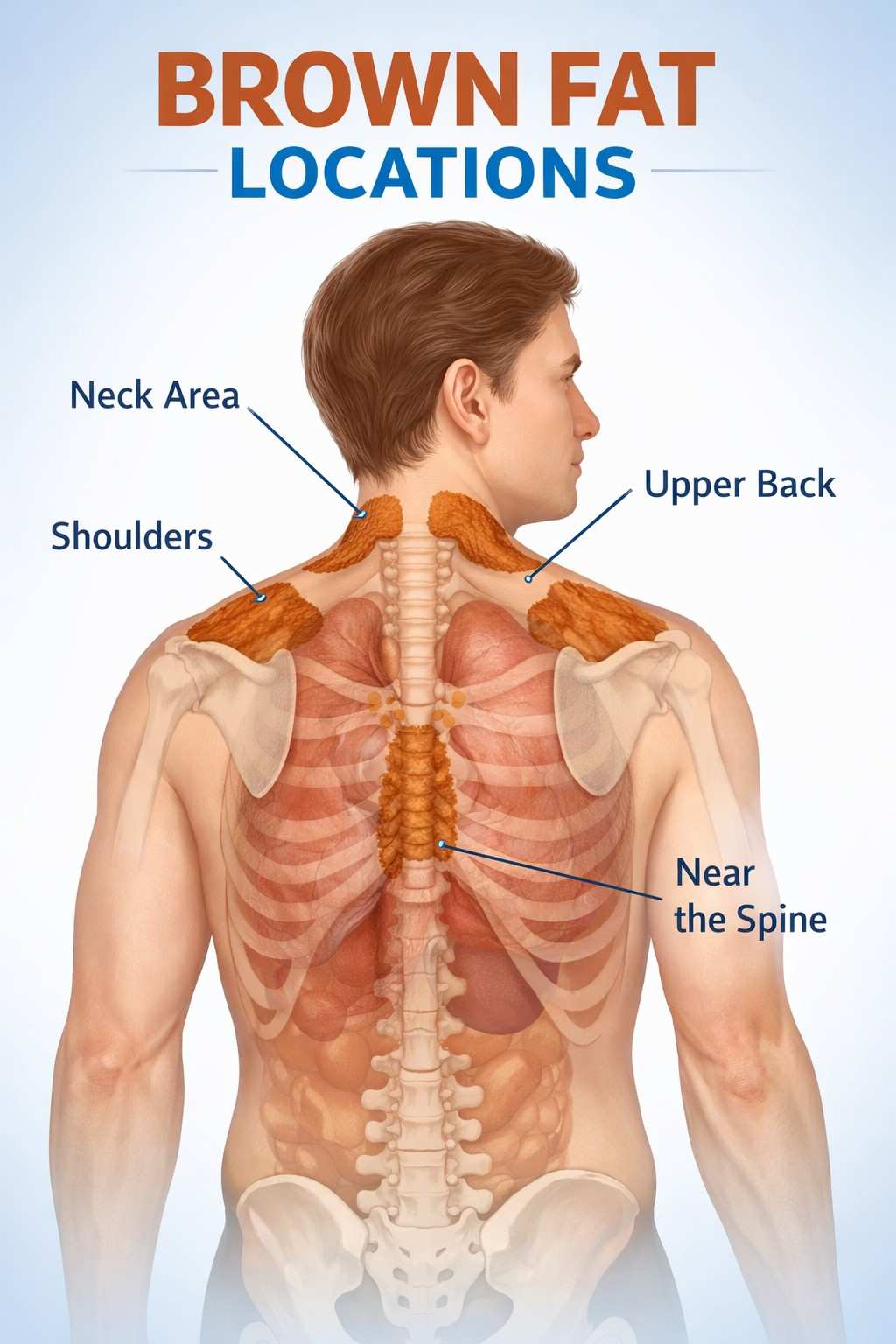
In infants, brown fat is essential for maintaining body temperature when shivering is not fully developed. Adults have smaller amounts, usually around the neck, upper chest, shoulders, and along the spine. Even in small amounts, brown fat can influence daily calorie use and overall metabolism (NIH Research Matters).
Research shows that people with higher brown fat activity tend to burn more calories at rest and have better blood sugar regulation. While brown fat alone does not cause significant weight loss, supporting its activation naturally can improve metabolism, energy balance, and overall metabolic health (Harvard Medical School).
How Does Brown Fat Work?
Non-shivering thermogenesis:
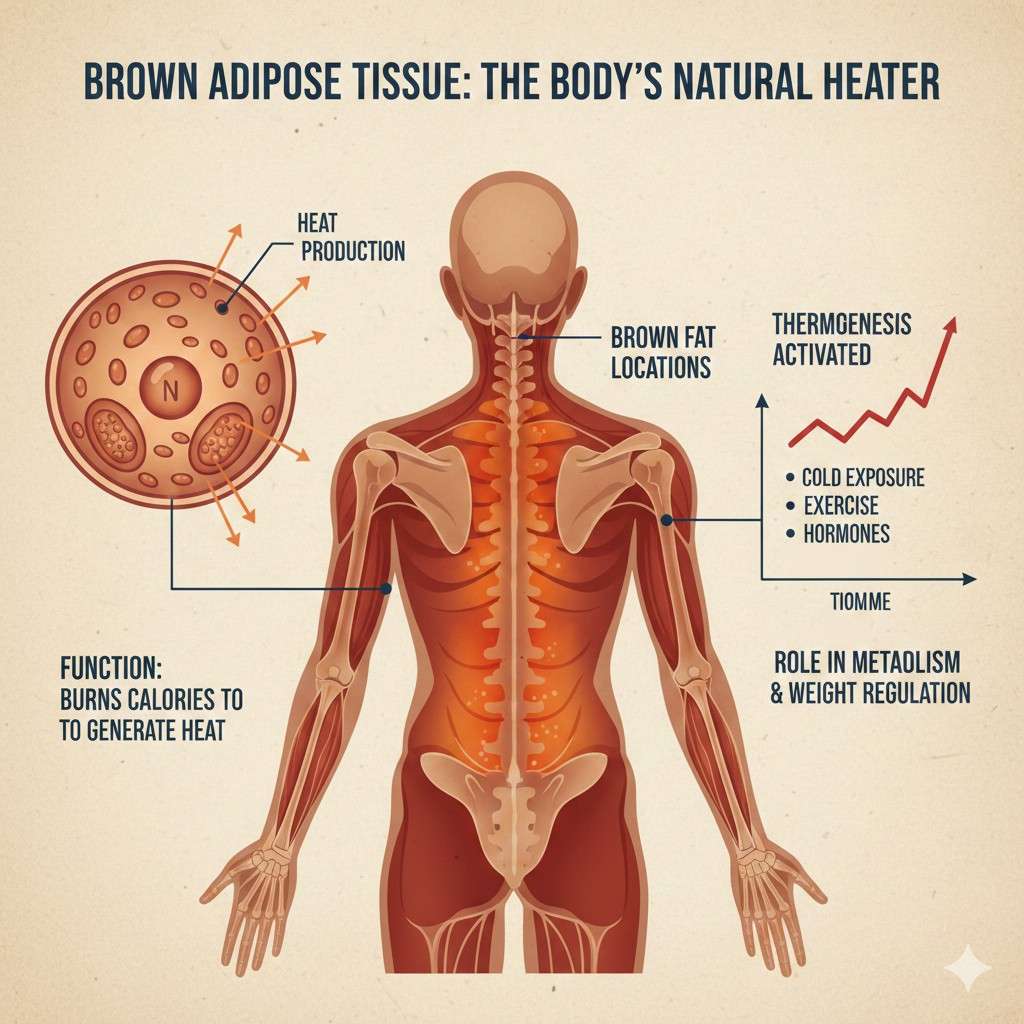
Brown fat generates heat through a process called non-shivering thermogenesis, which allows the body to burn calories without physical movement. When exposed to cold temperatures or increased energy demands, brown fat cells are activated and begin breaking down stored fat and glucose to produce heat rather than storing energy. This process helps maintain core body temperature and supports overall metabolic regulation (National Institutes of Health).
Mitochondria and uncoupling protein-1 (UCP1):
The calorie-burning ability of brown fat comes from its mitochondria, which contain uncoupling protein-1 (UCP1). UCP1 allows energy to be released as heat instead of being converted into ATP, the body’s usual energy currency. Because brown fat cells have a high number of mitochondria, they are especially efficient at burning calories for heat production (Cleveland Clinic).
Fuel utilization:
Activated brown fat draws fuel from both fatty acids and blood glucose, which improves insulin sensitivity and blood sugar control. This is one reason why higher brown fat activity is associated with better metabolic health and a lower risk of metabolic disorders, even though the total amount of brown fat in adults is relatively small (NIH Research Matters).
Cold exposure:
Cold exposure is one of the strongest natural triggers for brown fat activation. When the body senses cold, the nervous system signals brown fat to increase heat production. Physical activity and certain hormonal signals can also influence brown fat activity, although their effects are generally less significant than temperature exposure (Harvard Medical School).
Calorie-burning impact:
While brown fat increases daily energy expenditure, its effect is supportive rather than dramatic. It enhances metabolic efficiency and helps regulate energy balance, but long-term weight management still depends on lifestyle factors such as nutrition, regular physical activity, adequate sleep, and hormonal health (Mayo Clinic).
Can Activating Brown Fat Help With Weight Loss?
Calorie-burning effect: Activating brown fat increases energy expenditure by converting stored fat and glucose into heat. While the total amount of brown fat in adults is small, this calorie-burning effect can support weight management when combined with healthy eating and regular exercise (National Institutes of Health).
Metabolic support: Beyond calorie burning, brown fat activation improves insulin sensitivity and glucose metabolism. These effects can reduce fat storage tendencies and improve overall metabolic efficiency, supporting long-term weight control without being a shortcut for rapid weight loss (NIH Research Matters).
Realistic expectations: Brown fat activation is a supportive mechanism for metabolism rather than a primary weight-loss tool. Sustainable results depend on a combination of diet, physical activity, sleep, and hormonal balance (Mayo Clinic).
Read More: Weight Loss Guide
Natural Ways to Activate Brown Fat
Now let’s talk about simple, realistic ways to support brown fat activity. These are everyday lifestyle habits — not extreme hacks — and they focus on keeping the body healthy overall.
Mild Cold Exposure
Spending short periods in slightly cooler environments may naturally activate brown fat. This doesn’t mean sitting in ice baths or freezing conditions. Something as simple as being in a cool room, walking in pleasant cold weather or slightly lowering indoor temperature can trigger brown fat gently. The goal is comfort — not discomfort or shivering.
Regular Physical Activity
Exercise supports many metabolic processes, including brown fat activity. Movement encourages the body to use energy efficiently and may also promote beige fat — a type of fat that behaves similarly to brown fat. You don’t need extreme workouts. Even regular walking, yoga, stretching or light strength exercise can help when done consistently.
Good Quality Sleep
Sleep plays an important role in hormonal balance and metabolism. Irregular sleep patterns may interfere with how your body uses energy. Creating a calming bedtime routine, sleeping at consistent times and limiting late-night screen use can support better metabolic health — including brown fat activity.
Green Tea or Coffee in Moderation
Green tea and coffee can slightly increase the body’s heat-producing process. When consumed in moderation, they may support calorie burning. However, it is better to avoid heavy sugar and cream, as simple and natural forms are usually more beneficial.
A Nourishing, Balanced Diet
Your metabolism works best when your body receives the nutrients it needs. A balanced diet that includes protein, fiber, healthy fats, fruits, vegetables and whole grains supports energy balance and overall health. Crash dieting or skipping meals can have the opposite effect and slow metabolism.
Managing Stress
Chronic stress affects the body’s hormones and energy-burning systems. Finding simple ways to relax — such as breathing exercises, meditation, reading or spending time in nature — can support healthier metabolic function over time.
Can Activating Brown Fat Help With Weight Loss?
Activating brown fat can support weight loss, but it should be understood as a metabolic aid rather than a standalone solution. Brown fat increases energy expenditure by burning calories to produce heat, a process that can slightly raise the number of calories the body burns at rest. This added calorie burn may help prevent gradual weight gain and support fat loss over time, particularly when combined with healthy lifestyle habits (National Institutes of Health).
- Calorie-burning effect: When brown fat is activated, it uses both stored fat and blood glucose as fuel, which contributes to improved metabolic efficiency. However, the total amount of brown fat in adults is relatively small, meaning the overall calorie-burning impact is modest. On its own, brown fat activation is unlikely to cause significant or rapid weight loss (Mayo Clinic).
- Metabolic health benefits: While weight loss effects are limited, brown fat activation is strongly linked to better metabolic health. Increased brown fat activity has been associated with improved insulin sensitivity, better blood sugar control, and healthier lipid metabolism. These effects can make it easier to manage body weight over the long term by improving how the body handles energy (NIH Research Matters).
- Realistic expectations: Activating brown fat should be viewed as a supportive mechanism that enhances the body’s natural metabolism. Sustainable weight loss still depends on overall calorie balance, regular physical activity, adequate sleep, and hormonal regulation. Brown fat works best as part of a broader metabolic strategy rather than as a quick fix for weight loss (Harvard Medical School).
Read More: Metabolism Guide
Why Do Researchers Call It “Good Fat”?
Researchers often refer to brown fat as “good fat” because, unlike most body fat, it plays a protective and metabolically beneficial role. Instead of storing excess calories, brown fat actively burns energy to produce heat, which helps regulate body temperature and supports a healthier metabolic rate. Learning how to activate brown fat naturally can enhance this calorie-burning function, which contrasts with white fat that is linked to weight gain and slower metabolism when present in excess (National Institutes of Health).
Metabolic protection: Brown fat is considered beneficial because its activity improves insulin sensitivity and blood sugar regulation. By using glucose and fatty acids as fuel, brown fat prevents excess energy from being stored as white fat. Studies show that individuals with higher brown fat activity tend to have lower risks of obesity, type 2 diabetes, and metabolic dysfunction. This makes brown fat a metabolically protective tissue, reinforcing the importance of brown fat activation for health (NIH Research Matters).
Anti-obesity potential: Another reason brown fat is labeled “good fat” is its ability to counterbalance energy storage. While it does not cause rapid weight loss, brown fat metabolism increases baseline energy expenditure and helps the body manage calories more efficiently. Supporting brown fat activation naturally can contribute to better long-term weight management when combined with healthy lifestyle habits (Harvard Medical School).
Functional purpose: Unlike excess white fat, which may promote inflammation and hormonal imbalance, brown fat has a clear physiological purpose throughout life. Its role in thermogenesis and energy regulation explains why scientists consider it “good fat” rather than categorizing all fat as harmful (Cleveland Clinic).
Read More: Fast Metabolism
Can White Fat Turn Into Brown or Beige Fat?
Some research suggests that certain lifestyle habits — particularly exercise and mild cold exposure — may help white fat behave more like brown fat. This type of fat is sometimes called beige fat. Beige fat also burns energy and may support metabolic health.
When Should You See a Doctor?
If you experience unexplained weight loss, excessive sweating, heat intolerance, rapid heartbeat or ongoing weakness, it is important to speak with a healthcare professional. Sometimes symptoms that seem like “fast metabolism” may be related to thyroid or hormonal issues.
Final Thoughts
Brown fat is a fascinating part of the body that helps convert stored energy into heat. While you cannot control it completely, you can gently support brown fat activity through simple habits such as mild cold exposure, regular exercise, good sleep, balanced nutrition and stress management. Slow, steady and sustainable lifestyle changes remain the healthiest approach — for metabolism and for long-term well-being.
What activates brown fat naturally?
Mild cold exposure, regular movement, good sleep and a balanced lifestyle may help support natural brown fat activity.
Can brown fat help with weight loss?
Brown fat burns calories, but it is only one part of metabolism. Long-term results still depend on healthy daily habits.
Where is brown fat found in adults?
It is mainly found around the neck, shoulders, upper back and along the spine.
Is cold exposure safe for activating brown fat?
Mild cold is generally safe, but extreme cold should be avoided. People with health issues should consult a doctor first.
Sources / References
- How brown fat improves metabolism – National Institutes of Health (NIH) — explains how brown fat breaks down glucose and fat to create heat.
https://www.nih.gov/news-events/nih-research-matters/how-brown-fat-improves-metabolism National Institutes of Health (NIH) - Brown Fat (Brown Adipose Tissue): Function and Heat Production – Cleveland Clinic — detailed overview of brown fat’s role in heat generation and calorie burn.
https://my.clevelandclinic.org/health/body/24015-brown-fat Cleveland Clinic - New Obesity Tool? Brown fat thermogenesis research – Harvard Medical School — describes how brown fat produces heat and its relevance to energy expenditure.
https://hms.harvard.edu/news/new-obesity-tool Harvard Medical School - Brown adipose tissue (BAT) – Wikipedia — overview of BAT classification, function, and presence in adults.
https://en.wikipedia.org/wiki/Brown_adipose_tissue Wikipedia - Brown adipose tissue and thermogenesis review – PubMed — research on BAT’s role in thermogenesis and its activation stimuli like cold exposure.
https://pubmed.ncbi.nlm.nih.gov/25390014/ PubMed - Cold-Induced Brown Adipose Tissue Activity Alters Plasma Fatty Acids and Improves Glucose Metabolism – PubMed — study showing brown fat activation improves glucose metabolism and energy use.
https://pubmed.ncbi.nlm.nih.gov/28945846/ PubMed - Cold exposure stimulates beneficial brown fat growth – ScienceDaily/Endocrine Society — highlights how cold exposure increases brown fat activity and metabolic benefits.
https://www.sciencedaily.com/releases/2014/06/140623091949.htm
Medical Disclaimer
The content on this website is for informational and educational purposes only and is not intended to be a substitute for professional medical advice, diagnosis, or treatment. Always seek the guidance of a qualified healthcare provider with any questions you may have regarding a medical condition, metabolic health, weight management, or before making any changes to your diet, exercise, or lifestyle.
The information provided here about brown fat, metabolism, and related health topics is based on current research and reputable sources, but individual results may vary. Reliance on any information provided by this website is solely at your own risk.
If you think you may have a medical emergency, call your doctor or local emergency services immediately.
Last updated: January 3, 2026
This article is regularly reviewed to ensure accuracy and relevance.

Robert Harisson
ISSA Certified Personal Trainer | Nutrition Specialist (Cornell University)
Robert Harrison is an ISSA-certified personal trainer and a nutrition graduate from Cornell University. With over five years of fitness coaching and two years of health-blog writing, he specializes in metabolism, women’s health, weight management, and natural wellness. Robert creates simple, science-backed content that helps readers make safe and informed decisions. His work reflects strong E-E-A-T principles, combining real-world coaching experience with evidence-based nutrition knowledge.