





The most effective daily habits for a healthy lifestyle start with supporting your metabolism — drink 8–10 glasses of water throughout the day, starting with 2 glasses in the morning, fix your meal timings, finish dinner 1–2 hours before bed, move your body for 30–45 minutes daily, avoid oily and junk food, manage stress actively, take care of your gut health, read daily, sleep 7–9 hours every night, and do at least one activity that genuinely makes you feel good. These habits, practiced consistently, improve energy, metabolism, mental well-being, and long-term health without requiring drastic changes.
What Are Daily Habits for a Healthy Lifestyle?
Daily habits for a healthy lifestyle are consistent behaviors practiced every day that support physical health, mental well-being, metabolism, and disease prevention. These include staying hydrated, eating meals on time, exercising regularly, managing stress, maintaining gut health, and getting quality sleep. According to the World Health Organization (WHO), most chronic diseases are preventable through consistent healthy daily behaviors — not medication or extreme interventions.
Why Small Daily Habits Matter More Than Big Changes
Living a healthy lifestyle does not require extreme diets, expensive supplements, or hours in the gym. Long-term health comes from small daily habits repeated consistently over time. As someone who has spent years researching metabolism and healthy lifestyle habits, the clearest pattern is this — consistency matters far more than perfection. One perfect week means nothing. Three consistent months change everything.
The Centers for Disease Control and Prevention (CDC) reports that adults should aim for at least 150 minutes of moderate physical activity per week — that breaks down to just 30 minutes, five days a week. Research published by the National Institutes of Health (NIH) shows that even mild dehydration of 1–2% body water loss negatively affects concentration, mood, and metabolic function. Studies also suggest that building a sustainable habit takes anywhere from 21 to 66 days depending on the behavior and the individual.
Small changes. Consistent practice. Real results.
9 Best Daily Habits for a Healthy Lifestyle You Can Start Today
1. Fix Your Meal Timings

One of the most overlooked daily habits for a healthy lifestyle is not what you eat — it is when you eat. Eating at random times disrupts your body’s internal clock, slows digestion, and leads to unnecessary fat storage.
Fix a consistent schedule for breakfast, lunch, and dinner. When meal times are predictable, your digestive system prepares in advance — enzymes release on time, metabolism stays active, and blood sugar remains stable throughout the day.
The most important rule: Finish dinner at least 1–2 hours before bed. Eating right before sleep means your body spends the night digesting food instead of repairing cells, burning fat, and recovering. Late night eating is directly linked to weight gain, poor sleep quality, and a sluggish metabolism the next morning.
2. Start Every Morning With Water

Before coffee, before breakfast, before anything — your first habit every morning should be hydration. Your body loses water overnight through breathing and perspiration. Starting the day dehydrated slows metabolism, reduces mental clarity, and increases hunger signals.
Drink a minimum of 2 glasses of water first thing in the morning. Options that work well:
- Detox water — lemon + cucumber + mint soaked overnight
- Alkaline water — supports digestion and reduces acidity
- Warm lemon water — stimulates digestion and liver function
- Plain water — always works, always enough
This one habit alone has a measurable impact on energy levels, digestion, and appetite control throughout the day.
3. Move Your Body Every Single Day
Daily movement is the foundation of every healthy lifestyle. You do not need an intense gym workout every day. What matters is that your body moves consistently without exception.

Choose whatever works for you:
- Yoga — flexibility, stress relief, and core strength
- Stretching — keeps muscles loose, improves posture, prevents injury
- Walking — 30 minutes of brisk walking burns calories and clears your mind
- Home workouts — bodyweight exercises require zero equipment
- Any physical activity — dancing, cycling, swimming, sports
Aim for 30–45 minutes of movement daily. On low energy days, even 15–20 minutes of stretching counts. A body that moves daily has a faster metabolism, better hormone balance, and significantly lower risk of chronic disease. For drinks that support your morning movement routine, see our guide on Fast Metabolism Drinks.
4. Cut Oily Food, Sugar, and Junk — Especially If You Are Young or Older
This applies to everyone — but it is most critical for teenagers and older adults. Teenagers because these are the years that set metabolic patterns for life. Older adults because the body’s ability to process poor quality food decreases significantly with age.
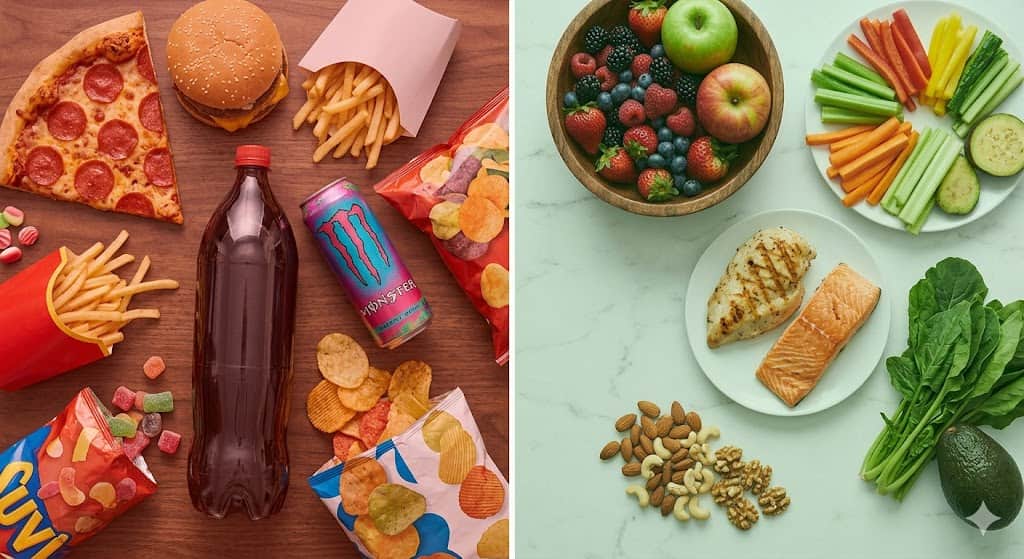
Avoid as much as possible:
- Oily and fried foods — clog arteries, spike inflammation, slow digestion
- Sugar and sugary drinks — spike insulin, cause energy crashes, promote fat storage
- Junk food and packaged snacks — high in sodium, preservatives, and empty calories
Replace with whole foods — fruits, vegetables, lean protein, whole grains, and healthy fats. Small swaps made consistently over months produce dramatic changes in how you look, feel, and think.
5. Actively Manage Your Stress

Stress is not just a mental problem — it is a direct physical health problem. Chronic stress raises cortisol levels, which increases belly fat, disrupts sleep, slows metabolism, and weakens the immune system. No diet or exercise plan fully works when stress is unmanaged.
The goal is not to eliminate problems — it is to shift your approach:
- Be a problem solver, not a worrier. When something goes wrong, ask what you can do — not how bad it is.
- Stay as happy as possible. Gratitude, positive social connections, and moments of joy are active daily choices.
- Do not carry stress to bed. Unresolved stress before sleep ruins sleep quality and makes everything worse the next day.
Simple daily practices — deep breathing, journaling, a short walk, talking to someone you trust — reduce stress more effectively than most people expect. Read more about the connection between stress and metabolism in our guide on How Hormones Affect Metabolism.
6. Take Care of Your Gut Health
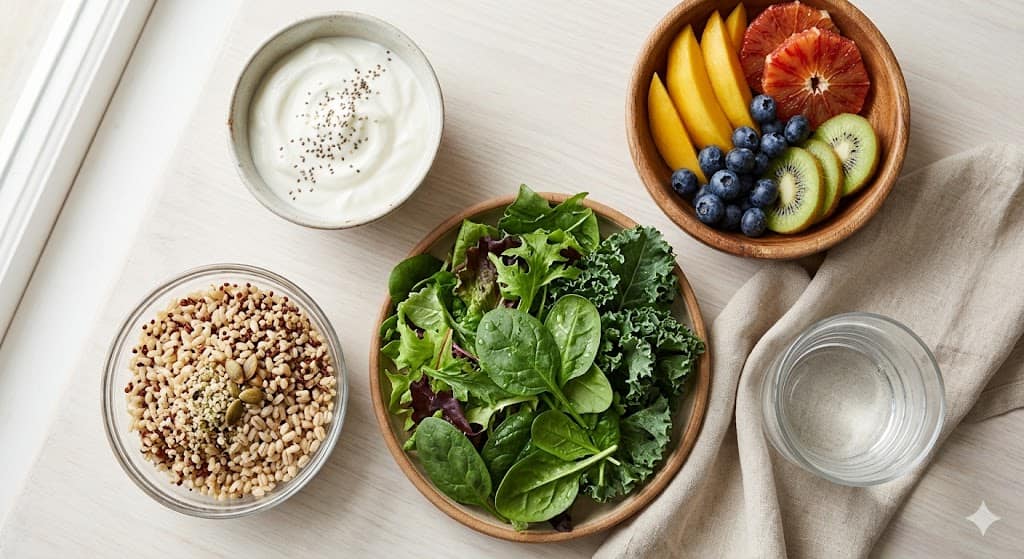
Your gut is your second brain. The health of your digestive system directly affects your energy, mood, immunity, skin, and weight. Most people ignore gut health until something goes wrong — bloating, constipation, constant fatigue, brain fog.
Daily habits that support gut health:
- Eat fiber-rich foods — vegetables, fruits, legumes, whole grains
- Stay hydrated throughout the day
- Eat fermented foods — yogurt, curd, kimchi — for natural probiotics
- Avoid skipping meals or eating erratically
- Reduce antibiotic use unless absolutely necessary
A healthy gut means better nutrient absorption, stronger immunity, and a metabolism that functions the way it should. For a deeper look at digestion and fat loss, read our guide on Best Supplements for Bloating and Weight Loss.
7. Prioritize Quality Sleep
This is the habit most people underestimate — and it may be the most powerful one on this list.

According to the National Institutes of Health (NIH), adults should aim for 7–9 hours of quality sleep every night. Poor sleep affects every system in your body — metabolism, appetite hormones, stress levels, concentration, immune function, and fat storage all worsen with insufficient sleep.
What poor sleep does to your body:
- Increases ghrelin (hunger hormone) — you eat more the next day
- Decreases leptin (fullness hormone) — you never feel satisfied
- Raises cortisol — increases belly fat storage
- Slows metabolism — burns fewer calories at rest
Maintaining a consistent sleep schedule — same bedtime, same wake time — is one of the most powerful free habits for overall health. For a full breakdown of how sleep connects to your metabolism, read our detailed guide: How Sleep Affects Metabolism.
8. Read at Least 15 Minutes Every Day
A healthy lifestyle is not just physical — it is mental. Daily reading is one of the most underrated healthy habits that consistently separates people who grow from people who stay stuck.

Even 15–20 minutes of reading daily:
- Reduces stress levels measurably
- Improves focus and concentration
- Keeps the brain sharp and active as you age
- Reduces risk of cognitive decline in older adults
It does not matter what you read. What matters is that you read something every single day.
9. Do One Thing Every Day That Makes You Feel Good
Every single day, do at least one activity that genuinely brings you joy — not because it burns calories, not because it is productive, simply because it makes you feel good.

This could be:
- Playing an indoor or outdoor sport
- Cooking something you love
- Listening to music or playing an instrument
- Gardening, painting, photography
- Spending quality time with people who energize you
Joy is not a luxury — it is a biological necessity. People who have daily feel-good activities have lower cortisol, better sleep, stronger immune systems, and live measurably longer. Read more on why motivation and mindset matter for long-term health: Why Motivation Fails for Weight Loss.
Healthy Habits at a Glance
These daily habits for a healthy lifestyle may seem simple, but practiced consistently, they can transform your physical and mental health.

| Daily Habit | Primary Benefit |
|---|---|
| Morning water/detox water | Hydration, metabolism kickstart |
| Fixed meal timings | Better digestion, stable blood sugar |
| 30–45 min movement | Fat loss, cardiovascular health |
| Cutting junk and sugar | Lower inflammation, better energy |
| Stress management | Lower cortisol, better mood |
| Gut health focus | Better immunity and nutrient absorption |
| 7–9 hours sleep | Metabolism, hormone balance, recovery |
| Daily reading | Mental sharpness, stress reduction |
| Feel-good activity | Lower cortisol, better mental health |
FAQ — Daily Habits for a Healthy Lifestyle
Q: What are the most important daily habits for a healthy lifestyle?
The most important daily habits for a healthy lifestyle include drinking enough water every morning, fixing meal timings, exercising for 30–45 minutes, cutting junk and sugary food, managing stress, taking care of gut health, and sleeping 7–9 hours every night. Consistency with these habits over 2–3 months produces measurable results.
Q: How can a complete beginner start a healthy lifestyle?
Start with just three habits — drink 2 glasses of water every morning, walk for 20 minutes daily, and finish dinner 1–2 hours before bed. Do these consistently for 2 weeks, then add more habits gradually. Trying to change everything at once usually leads to giving up within days.
Q: What daily habit improves health the most?
Regular physical activity and quality sleep are the two habits with the broadest impact on overall health. The CDC recommends at least 150 minutes of moderate activity per week. The NIH recommends 7–9 hours of sleep per night. Together, these two habits improve metabolism, hormones, immunity, and mental health simultaneously.
Q: How long does it take to build healthy daily habits?
Research suggests building a sustainable habit takes 21 to 66 days depending on the behavior and individual. Simple habits like drinking morning water can become automatic within 2–3 weeks. More complex habits like daily exercise typically take 4–8 weeks to feel natural.
Q: What should I eat for a healthy daily routine?
Follow this principle — eat breakfast like a king, lunch like a middle class, dinner like a poor man. Your heaviest, most nutritious meal should be breakfast. Lunch should be moderate and balanced. Dinner should be light but nutritious and finished 1–2 hours before bed.
Q: Does gut health really affect overall health?
Yes. According to research supported by the NIH, the gut microbiome directly influences immune function, mood, metabolism, and disease prevention. Poor gut health is linked to fatigue, bloating, weight gain, brain fog, and weakened immunity. Daily fiber intake, fermented foods, and consistent hydration are the most effective ways to support it.
Q: How does sleep affect daily health habits?
Poor sleep disrupts every other healthy habit. It increases hunger hormones, raises cortisol, slows metabolism, and reduces willpower — making it harder to exercise, eat well, and manage stress. Quality sleep is the foundation that makes all other healthy habits more effective.
The Bottom Line
A healthy lifestyle is not built in a gym or on a diet. It is built in the small decisions you make every single day — when you eat, how you start your morning, how you move, what you put in your body, how you handle stress, and how much rest you give yourself.
Start with two or three of these daily habits for a healthy lifestyle. Build from there. Consistency over months is what creates real lasting change.
For more on how daily habits connect to your metabolism and long-term health:
- Basal Metabolic Rate Guide
- Slow Metabolism — Causes and Fixes
- How Sleep Affects Metabolism
- Fast Metabolism Drinks
- How Hormones Affect Metabolism
- Fat Loss Plateau Reasons
Disclaimer: This article is for informational and educational purposes only and does not constitute medical advice. Consult a qualified healthcare provider before making significant changes to your diet, exercise routine, or lifestyle.
References
World Health Organization. Physical Activity Fact Sheet. WHO, 2022.
https://www.who.int/news-room/fact-sheets/detail/physical-activity Centers for Disease Control and Prevention. How Much Physical Activity Do Adults Need? CDC, 2023.
https://www.cdc.gov/physicalactivity/basics/adults/index.htm National Institutes of Health. The Benefits of Sleepin. NIH MedlinePlus, 2021.
https://medlineplus.gov/healthysleep.html Harvard T.H. Chan School of Public Health. The Nutrition Source — Healthy Eating Plate. Harvard, 2023.
https://www.hsph.harvard.edu/nutritionsource/healthy-eating-plate/ National Institutes of Health. Gut Microbiome and Health. NIH National Center for Complementary and Integrative Health, 2022.
https://www.nccih.nih.gov/health/probiotics-what-you-need-to-know American Heart Association. Recommendations for Physical Activity in Adults. AHA, 2023.
https://www.heart.org/en/healthy-living/fitness/fitness-basics/aha-recs-for-physical-activity-in-adults Popkin, B.M., D’Anci, K.E., & Rosenberg, I.H. Water, Hydration and Health. Nutrition Reviews, 2010.
https://pubmed.ncbi.nlm.nih.gov/20646222/ Selhub, E. Nutritional Psychiatry: Your Brain on Food. Harvard Health Blog, 2022.
https://www.health.harvard.edu/blog/nutritional-psychiatry-your-brain-on-food-201511168626 Leproult, R., & Van Cauter, E. Role of Sleep and Sleep Loss in Hormonal Release and Metabolism. Endocrine Development, 2010.
https://pubmed.ncbi.nlm.nih.gov/19584534/ Sonnenburg, J., & Sonnenburg, E. Gut Feelings — The Microbiome and Mental Health. Scientific American, 2022.
https://www.scientificamerican.com/article/gut-feelings-the-microbiome-and-mental-health/ Lally, P., et al. How Are Habits Formed: Modelling Habit Formation in the Real World. European Journal of Social Psychology, 2010.
https://pubmed.ncbi.nlm.nih.gov/21156582/(21–66 days habit formation research) Mariotti, A. The Effects of Chronic Stress on Health. Reviews on Environmental Health, 2015.
https://pubmed.ncbi.nlm.nih.gov/26310809/

ISSA Certified Personal Trainer | Nutrition Specialist (Boston University)
Naithen Matthews is an ISSA-certified personal trainer and a nutrition graduate from Cornell University, with advanced graduate study (MS and PhD level work) in Nutrition & Metabolism focusing on nutrient metabolism, energy balance, chronic disease mechanisms, and obesity.
With over five years of experience in fitness coaching and more than two years of writing in the health and wellness space, Naithen specializes in metabolism, women’s health, weight management, and natural wellness. He is passionate about turning complex science into clear, practical guidance that anyone can understand.
Naithen’s work reflects strong E-E-A-T principles, combining real-world coaching experience with evidence-based nutrition knowledge to help readers make safe, informed, and confident health decisions.