




If you’re wondering how to lose 10 pounds in 2 months, here’s the direct answer: it takes an average weight loss of about 1 to 1.25 pounds per week, reached through a daily calorie deficit of 500–625 calories from a mix of diet and exercise. Whether you searched “lose 10 pounds in 2 months,” “lose 10 lbs in 2 months,” or “how to lose 10lbs a month” — same goal, same math, same plan below. And yes: is losing 10 pounds in 2 months healthy? For most people, this pace falls squarely within the range the CDC and Mayo Clinic both recommend for sustainable, keep-it-off weight loss.
The problem isn’t the goal — it’s how most people chase it. They cut calories too hard, feel miserable by week two, and quit. Or they start an intense workout routine they can’t sustain and burn out before the scale even moves. This guide gives you the actual numbers, an actual week-by-week plan, and the honest tradeoffs — not “eat less, move more.”
Looking for the bigger picture first? Start with our Complete Weight Loss Guide for the full framework, or jump straight into the plan below.
Is Losing 10 Pounds in 2 Months Realistic?
Yes. Ten pounds over 8 weeks works out to 1.25 lbs per week — right inside the range research shows people are most likely to actually maintain long-term. It’s not the fastest possible pace, but it’s the one that doesn’t collapse the moment life gets busy.
Is Losing 10 Pounds in 2 Months Healthy?
Yes, for most people. The Mayo Clinic recommends aiming for 1–2 lbs per week over the long term, which needs a deficit of roughly 500–750 calories a day. At 1.25 lbs/week, this plan sits comfortably inside that window — safer and more sustainable than trying to lose the same 10 lbs in one month (2.5 lbs/week), which risks muscle loss, metabolic slowdown, and rebound weight gain. For the full weekly breakdown by body weight and goal, see our Safe Weight Loss Per Week guide.
What About 10 Kilos in Two Months?
This is a different — and much harder — goal than 10 pounds. Ten kilos is about 22 lbs, which works out to roughly 2.75 lbs (1.25 kg) per week. That’s above the 1–2 lbs/week range most health bodies consider sustainable, so it typically requires a larger daily deficit, more structured training, and closer attention to protein intake to protect muscle. It’s achievable for some people with higher starting body weight, but it isn’t the same plan as the one below — treat it as a more aggressive variant, not a direct swap.
Can You Lose 25, 50, or 70 Pounds in 2 Months?
No — not safely. These numbers show up often in search, but losing 25–70 lbs in 8 weeks would mean a weekly rate 3–6x higher than what’s considered safe, and it almost always comes from water and muscle loss rather than fat. If your goal is a larger amount of weight, the same principles in this guide still apply — you just need a longer timeline. See our guide on losing weight over a few months for larger goals for a realistic pacing plan.
The 3 Pillars of Losing 10 Pounds in 2 Months
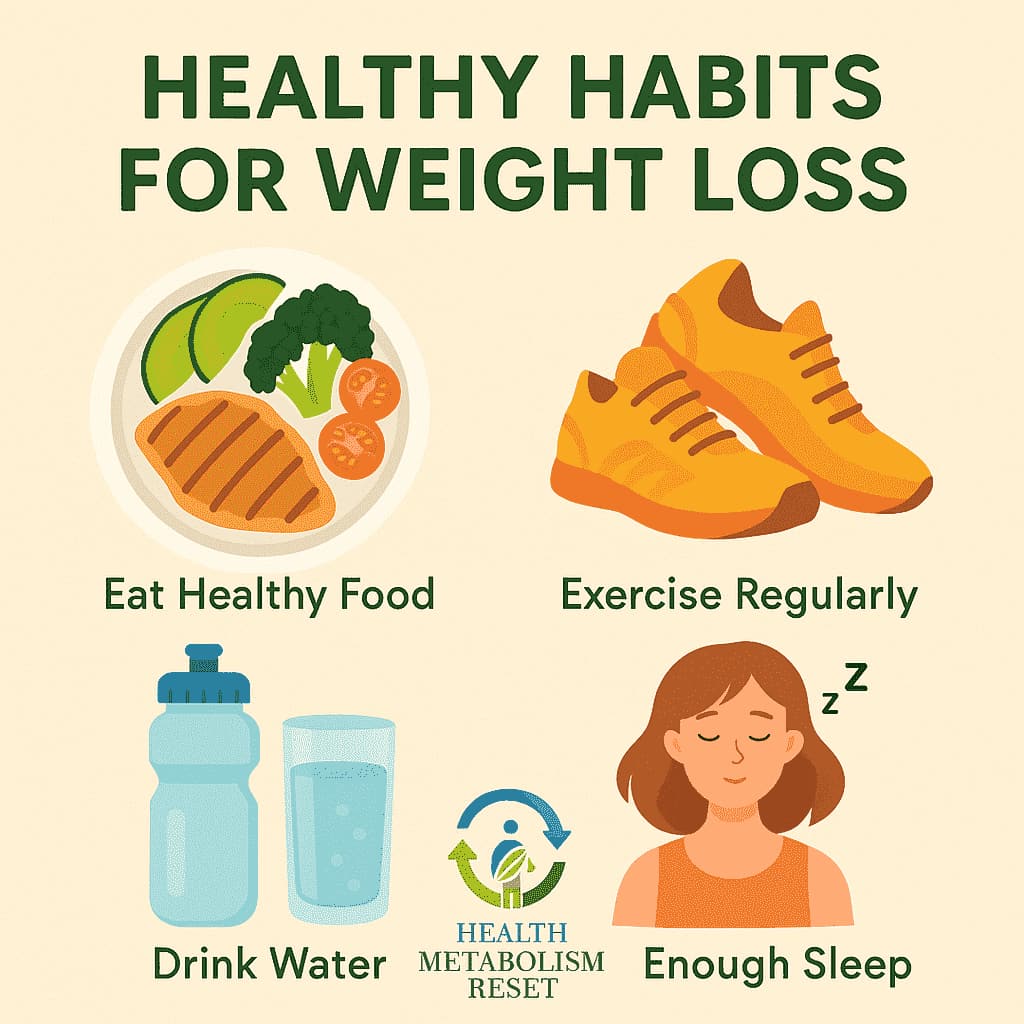
1. Create a sustainable calorie deficit
- Track intake with an app (MyFitnessPal, Lose It) — most people underestimate calories by 200–300/day without tracking.
- Prioritize protein and fiber at every meal to stay full and protect muscle during the deficit.
2. Move strategically, not excessively
- 150+ minutes/week of moderate cardio (walking, cycling, swimming).
- 2–3 strength sessions/week — this protects muscle and raises resting metabolic rate.
3. Build habits that outlast the 8 weeks
- Cut liquid calories (soda, juice, sweetened coffee) first — often half your daily deficit with zero willpower required.
- Hydrate before meals to naturally reduce portion sizes.
- Don’t restrict below 1,200 (women) / 1,500 (men) calories/day — going lower slows metabolism and isn’t sustainable.
How to Lose 10 Pounds in 2 Months: The Calorie Math
Weight loss comes down to one mechanism: a consistent calorie deficit. Not a specific diet or food — just burning more than you take in.
To lose 10 lbs in 8 weeks, you need a daily deficit of roughly 600–625 calories. Split it so no single lever has to do all the work:
| Source | Daily Amount |
|---|---|
| Cut from food | 300–350 calories (one processed meal swapped, or cut one sugary drink/day) |
| Burned through exercise | 250–300 calories (a 40-minute brisk walk) |
Minimum safe intake: don’t go below 1,500 cal/day (men) or 1,200 cal/day (women) — lower than this risks health and isn’t sustainable long-term.
How to Lose 10lbs a Month — Is That the Same Thing?
No. If you’re searching “how to lose 10lbs a month,” that’s a different pace than “lose 10 lbs in 2 months.” Ten lbs a month is 2.5 lbs/week — a daily deficit of ~875 calories, which is demanding and hard to sustain without constant hunger or fatigue. To lose 10 lbs in 2 months, you’re at 1.25 lbs/week instead — the same total weight loss, spread out for a deficit that’s roughly a third smaller and far easier to live with.
The Week-by-Week Plan to Lose 10 Pounds in 2 Months
| Week | Daily Deficit | Expected Loss | Key Focus |
|---|---|---|---|
| 1–2 | 500–600 cal | 1.0–1.5 lbs | Cut liquid calories + 30-min daily walk |
| 3–4 | 500–600 cal | 1.0–1.2 lbs | Increase protein + 2x strength training |
| 5–6 | 500–700 cal | 1.0–1.2 lbs | Track food in app + add 1 HIIT session |
| 7–8 | 500–600 cal | 0.8–1.2 lbs | Recalculate TDEE + maintain habits |
| Total | — | 8–10 lbs | After 8 weeks of consistent effort |
Weeks 1–2: Cut the obvious stuff first
Don’t overhaul your whole diet in week one — you’ll burn out. Focus on two wins:
- Cut liquid calories. Sodas, juices, flavored coffees, energy drinks can add 300–500 calories a day without ever making you feel full. Swap for water, black coffee, or unsweetened tea.
- Walk 30–40 minutes daily. Not running — walking. It burns ~150–200 calories and builds the daily-movement habit everything else depends on.
Expected loss: 1–1.5 lbs.
Weeks 3–4: Build the structure
- Raise protein to ~0.7–1g per pound of bodyweight — it keeps you full, protects muscle, and costs more calories to digest than carbs or fat.
- Add 2 strength sessions/week: squats, deadlifts, push-ups, rows.
Expected loss: 1–1.2 lbs/week.
Weeks 5–6: Track and optimize
This is the week most people plateau and panic. Usually it just means your body has adapted, or your tracking has gotten loose — for a deeper look at less obvious causes, see Fat Loss Plateau Reasons.
- Log food honestly for 10–14 days. Most people find they’re eating 200–300 more calories than they thought.
- Add one HIIT session/week: 20–30 minutes of hard-effort/recovery intervals.
Expected loss: 1–1.2 lbs/week.
Weeks 7–8: Finish strong
Your body now burns slightly fewer calories than it did in week one — that’s normal. If the scale stalls 10+ days, recalculate your TDEE at your new weight and trim calories by 100–150 (no more than that). Not sure what TDEE actually means or how to estimate yours? Our Basal Metabolic Rate guide walks through the calculation.
Expected loss: 0.8–1.2 lbs/week. Total projected: 8–10 lbs over 8 weeks.
What to Eat to Lose 10 Pounds in 2 Months
Three things matter more than any meal plan with 47 rules:
Protein at every meal. Chicken, eggs, Greek yogurt, cottage cheese, lentils, tofu, fish. Aim for 25–30g per meal — protein and fiber are the two nutrients most responsible for making a meal actually filling.
Portion guide (no scale needed):
| Food | Portion Size |
|---|---|
| Protein | 1 palm |
| Vegetables | 1 fist |
| Carbs (rice, quinoa) | 1 cupped hand |
| Fats (oil, avocado) | 1 thumb |
Vegetables and fiber-rich carbs for volume. A big bowl of roasted vegetables + grilled chicken can be 400 calories. A small bag of chips is also 400 calories. One fills you up for hours.
Cut liquid calories first — replacing sugar-sweetened drinks with water is one of the single highest-leverage changes you can make.
For meal ideas that fit this plan, see our Best Weight Loss Foods list, the Evidence-Based Weight Loss Foods breakdown, or try our 7-Day Smoothie Weight Loss Plan for weeks 1–2. If salmon is on your rotation, check whether salmon is good for weight loss and browse lean salmon recipes.
The Exercise Plan to Lose 10 Pounds in 2 Months
- 4–5 days/week moderate cardio: 30–45 min brisk walking, cycling, or swimming.
- 2–3 days/week strength training: compound moves (squats, deadlifts, lunges, rows, push-ups) working multiple muscle groups per minute.
- 1 optional HIIT session: 30 sec hard effort / 90 sec recovery, 8–10 rounds. Skip if you’re new to exercise — build a base first.
Cardio burns calories during the session. Strength training keeps burning them afterward through the “afterburn” effect (EPOC), and resistance training has been shown to meaningfully raise resting metabolic rate over time — which is why combining both each week outperforms doing just one.
New to any of this? Check whether running is good for weight loss if you prefer it over walking, start strength training with how to do a pushup for beginners, and target stubborn areas with best exercises to lose belly fat.
2 Months vs 1 Month vs 3 Months — Which Timeline Fits You?
| Timeline | Weekly Rate | Daily Deficit Needed | Difficulty |
|---|---|---|---|
| 1 month (10 lbs) | 2.5 lbs/week | ~875 cal | Hard — risk of muscle loss, rebound |
| 2 months (10 lbs) | 1.25 lbs/week | 600–625 cal | Comfortable, sustainable — recommended |
| 3 months (10 lbs) | 0.83 lbs/week | 300–400 cal | Easiest — best for long-term habit building |
If you’ve tried aggressive dieting before and it didn’t stick, the 3-month version uses the exact same habits with less daily restriction — same foods, same workouts, just less pressure per day.
How Many Pounds Can You Lose in Two Months?
The amount of weight you can lose in two months depends on your diet, exercise, metabolism, and starting weight. A healthy and realistic goal is usually 8–16 pounds (4–8 kg) in two months with consistent lifestyle changes.
Some people may lose more weight in the first few weeks due to water loss, especially when making major dietary changes. However, long-term fat loss happens gradually and requires consistency.
Remember that everyone’s body responds differently. Instead of focusing only on the number on the scale, pay attention to improvements in energy levels, body measurements, fitness, and overall health. A steady approach is more likely to help you maintain your results after two months and beyond.
Common Mistakes to Avoid
- Eating too little. Severe restriction slows metabolism and causes muscle loss — the opposite of what you want.
- Overestimating calories burned. Fitness trackers tend to run high. Don’t “eat back” everything they say you burned.
- Quitting after one slip-up. Consistency over 8 weeks beats perfection in any single day.
Fast weight loss tends to bring rebound gain, fatigue, dehydration, and muscle loss. Slower loss is linked to better long-term results because you’re building habits instead of shocking your system. The goal isn’t just losing the weight — it’s not gaining it back.
If motivation — not knowledge — is what’s actually derailing you by week 3 or 4, why motivation fails for weight loss covers the more useful fix.
Bottom Line
If you’ve been searching how to lose 10 pounds in 2 months, the answer is: it’s realistic, healthy, and one of the more achievable fitness goals you can set. The math is simple; sticking to it is the actual challenge. Start with the two easiest wins — cut liquid calories, add a 30-minute daily walk — and let that momentum carry you into week eight.
Related reading:
Fast Metabolism Symptoms
Is Salmon Good for Weight Loss
Loose Skin After Weight Loss
Safe Weight Loss Per Week
Weight Loss Plan for Beginners
Women’s Weight Loss Guide
Is it possible to lose 10 pounds in 2 months?
Yes — a consistent 500–625 calorie daily deficit through diet and exercise makes 10 lbs over 8 weeks achievable for most people.
How do you lose 10 lbs in 2 months?
Combine a 300–350 calorie cut from food with 250–300 calories burned through exercise (like a 40-minute daily walk), following the week-by-week deficit and habit plan outlined: a consistent ~600 calorie daily deficit.
Is losing 10 pounds in 2 months healthy?
Yes. At 1.25 lbs/week, it falls within the 1–2 lbs/week range recommended by the CDC and Mayo Clinic for sustainable weight loss.
Is losing 10 lbs a month safe?
It is at the aggressive end of safe weight loss—2.5 lbs/week is above most clinical guidance. Most people maintain results longer with an 8–12 week approach instead.
How fast can you safely lose 10 lbs?
The fastest safe pace is about 2 lbs/week (5–6 weeks total). Eight weeks is more realistic for most people without extreme restriction.
Can you lose 10 pounds in 3 months instead?
Yes, and for many people it’s the smarter choice, since it requires a smaller daily deficit (300–400 calories) and is easier to sustain.
How many pounds can you lose in two months?
A healthy, realistic range is 8–16 lbs (4–8 kg) in two months with consistent diet and exercise changes.
Is it possible to lose 10 kilos in two months?
It’s harder than 10 pounds—10 kg is about 22 lbs, or roughly 2.75 lbs/week, above the range most guidelines consider sustainable. It can work for people with more weight to lose, but requires a larger daily deficit and more structured training.
Can you lose 25 or 70 pounds in 2 months?
Not safely. That rate of loss is far beyond the 1–2 lbs/week guideline and would come mostly from water and muscle, not fat. Larger goals need a longer timeline using the same principles.
What are the main steps to lose 10 pounds in 2 months?
Create a sustainable calorie deficit, move strategically with cardio and strength training, and build habits that last—cutting liquid calories, walking daily, tracking food, and adjusting as you lose weight.
References
- GetLabTest.com — How to Lose 10 Pounds in 2 Months Safely. https://www.getlabtest.com/news/post/lose-10-pounds-2-months
- WebMD — Calorie Deficit: A Complete Guide. https://www.webmd.com/diet/calorie-deficit
- Healthline — How to Lose 10 Pounds: Weight Loss Meal Plan. https://www.healthline.com/health/food-nutrition/lose-10-pounds-weight-loss-meal-plan
- Mayo Clinic — Counting Calories: Get Back to Weight Loss Basics. https://www.mayoclinic.org/healthy-lifestyle/weight-loss/in-depth/calories/art-20048065
- Mayo Clinic — Weight Loss: 6 Strategies for Success. https://www.mayoclinic.org/healthy-lifestyle/weight-loss/in-depth/weight-loss/art-20047752
- CDC — Steps for Losing Weight. https://www.cdc.gov/healthy-weight-growth/losing-weight/index.html
- Forhers.com — Calorie Deficit Calculator. https://www.forhers.com/tools/calorie-deficit-calculator
- PubMed — Strength Training Increases Resting Metabolic Rate in Older Men. https://pubmed.ncbi.nlm.nih.gov/8175496/
- IDEA Fitness — How Strength Training Impacts Metabolism. https://www.ideafit.com/how-strength-training-impacts-metabolism/
- Signos — How Strength Training Improves Metabolic Health. https://www.signos.com/blog/metabolic-health-strength-training
Medical Disclaimer:
This content is for educational purposes only and is not a substitute for professional medical advice. Consult your physician before starting any new diet or exercise program.
Blog History
Posted On:
Last Upadted:

ISSA Certified Personal Trainer | Nutrition Specialist (Boston University)
Naithen Matthews is an ISSA-certified personal trainer and a nutrition graduate from Cornell University, with advanced graduate study (MS and PhD level work) in Nutrition & Metabolism focusing on nutrient metabolism, energy balance, chronic disease mechanisms, and obesity.
With over five years of experience in fitness coaching and more than two years of writing in the health and wellness space, Naithen specializes in metabolism, women’s health, weight management, and natural wellness. He is passionate about turning complex science into clear, practical guidance that anyone can understand.
Naithen’s work reflects strong E-E-A-T principles, combining real-world coaching experience with evidence-based nutrition knowledge to help readers make safe, informed, and confident health decisions.



Leave feedback about this