




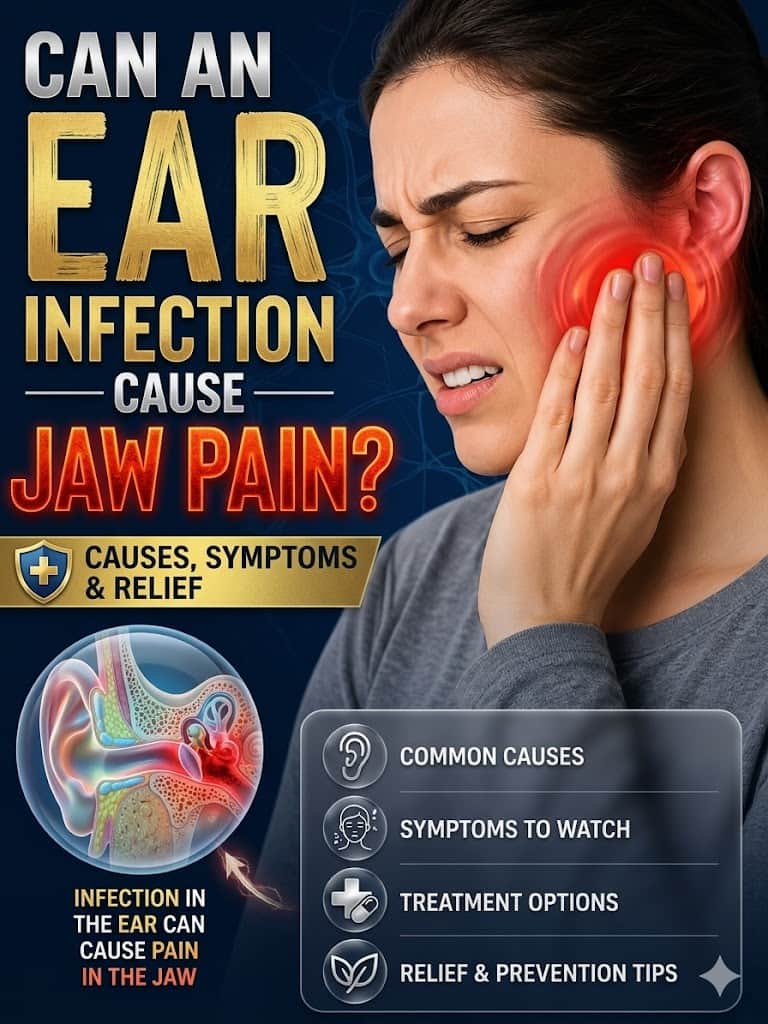
Jaw pain is one of those symptoms that catches people off guard — especially when there is no obvious dental issue or injury involved. If you have been dealing with jaw discomfort alongside ear pressure or pain, you may be wondering: Can jaw pain be caused by an ear infection?
Yes, ear infections can sometimes cause jaw pain due to shared nerves and inflammation. Jaw pain from an ear infection is a recognized and relatively common experience. But the relationship between the two is more nuanced than most people realize, and understanding why it happens can help you make better decisions about when to wait, when to treat, and when to seek medical attention.
Why the Ear and Jaw Are So Closely Connected
To understand how an ear infection can cause jaw pain, it helps to first understand the anatomy involved.
The ear and jaw share a surprisingly small amount of real estate in the body. The temporomandibular joint — commonly called the TMJ — sits directly in front of the ear canal. This joint connects your lower jaw to your skull and is responsible for every chewing, talking, and yawning movement you make. Because of this proximity, inflammation or infection in the ear can sometimes create pressure, referred pain, or direct irritation that extends into the jaw area.
Additionally, several nerves — particularly branches of the trigeminal nerve — serve both the ear and the jaw region simultaneously. When one area becomes inflamed, pain signals can travel along shared nerve pathways and be felt in an entirely different location. This is called referred pain, and it is one of the primary reasons can ear infection cause jaw pain is such a commonly searched question.
How an Ear Infection May Lead to Jaw Pain
Not every ear infection will cause jaw discomfort — but several mechanisms can explain why some people experience it:
Inflammation and swelling. A middle ear infection, known medically as otitis media, causes fluid buildup and inflammation within the ear. This swelling can press against surrounding structures, including those close to the jaw joint, potentially causing localized discomfort or a dull aching sensation in the jaw area.
Shared nerve pathways. As mentioned, the trigeminal nerve has branches that cover both the ear and the jaw. Irritation in the ear may sometimes be interpreted by the brain as jaw pain — even when the jaw itself is not the source of the problem.
Lymph node involvement. Ear infections can cause nearby lymph nodes to swell, particularly those located just below the ear and along the jaw line. This swelling may sometimes feel like jaw pain or tenderness when touched.
Spread of infection. In less common cases, an untreated or severe ear infection may spread to surrounding tissue. This is rare but worth noting, particularly if jaw pain is accompanied by other concerning symptoms.
Can Ear Infection Cause Jaw to Hurt on One Side?
Yes — and this is actually the more typical presentation. Since most ear infections affect one ear at a time, jaw pain from ear infection tends to be felt on the same side as the infected ear. If you notice that your jaw aches specifically on the left or right side and you also have ear pressure, fluid sensation, or muffled hearing on that same side, the two symptoms may well be connected.
That said, one-sided jaw pain has multiple possible causes — including TMJ disorders, dental issues, muscle tension, or sinus problems — and should not be self-diagnosed without ruling out other conditions.
Other Symptoms That Often Accompany This
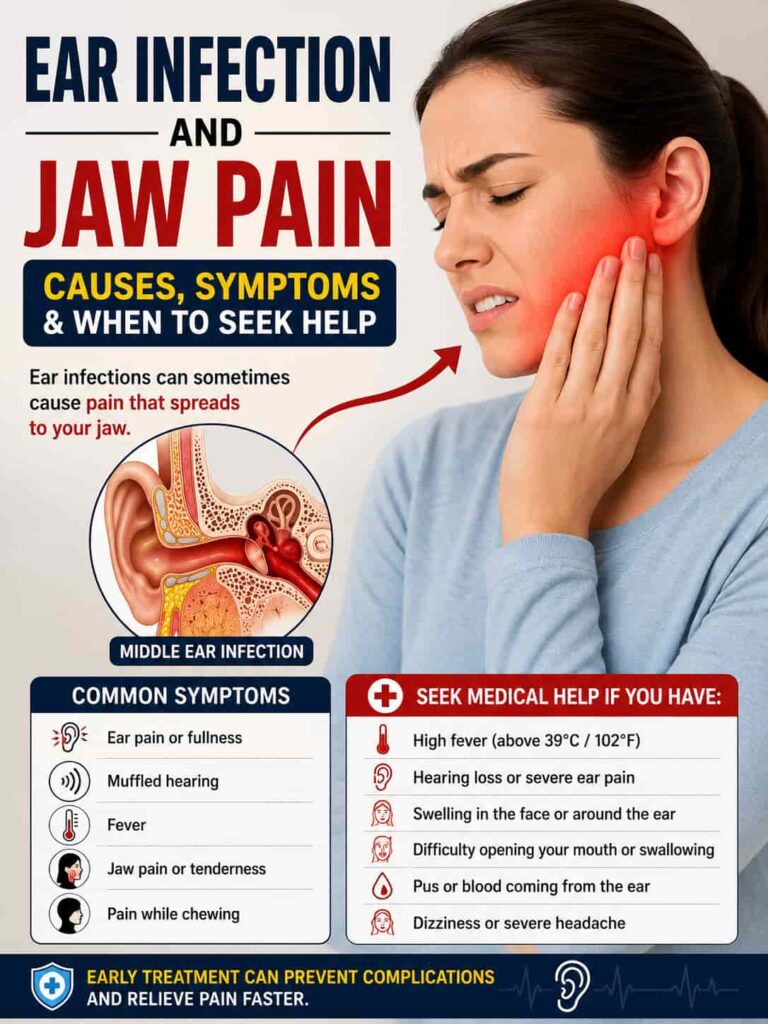
If can ear infection cause jaw pain applies to your situation, you will likely notice additional symptoms alongside the jaw discomfort. These may include:
- A feeling of fullness or pressure in the ear
- Muffled or reduced hearing on the affected side
- Earache or a throbbing pain inside the ear
- Low-grade fever, particularly in children
- Tenderness behind or below the ear
- Difficulty chewing comfortably due to jaw stiffness or soreness
The presence of multiple symptoms together — rather than jaw pain in isolation — may suggest an ear infection is the underlying cause, though a healthcare provider is the only person who can confirm this.
Jaw and Ear Pain on One Side: Could It Be an Ear Infection?
One-sided jaw and ear pain is one of the more frustrating symptoms to self-assess because several completely different conditions can produce an almost identical feeling. An ear infection is one possibility — but it is not the only one worth considering.
Ear Infection When the middle or outer ear becomes infected, inflammation and fluid buildup can create pressure that radiates toward the jaw on the same side. The pain is often described as a deep, throbbing ache rather than a sharp sensation. It usually comes alongside ear fullness, muffled hearing, or fever — which helps distinguish it from other causes.
TMJ Disorder The temporomandibular joint sits directly in front of the ear canal. When this joint is inflamed, overworked, or misaligned, it can produce pain that feels exactly like ear pain — even though the ear itself is completely fine. TMJ-related discomfort is often worse when chewing, yawning, or clenching the jaw, and may include a clicking or popping sensation near the ear.
Dental Abscess An infected tooth — particularly upper back molars — can send pain signals upward toward the ear and jaw on the same side. This type of referred pain can sometimes be mistaken for an ear infection entirely. If jaw and ear pain on one side is accompanied by tooth sensitivity, gum swelling, or pain when biting, a dental evaluation should be a priority.
Sinus Infection The maxillary sinuses sit close to both the upper jaw and the ear canal. When these sinuses become congested or infected, the resulting pressure can be felt across the cheekbone, upper jaw, and ear simultaneously — typically on one side if the infection is unilateral. Sinus-related pain often worsens when bending forward or lying down.
Nerve Pain The trigeminal nerve — which serves much of the face including the jaw and ear region — can sometimes become irritated or compressed, producing sharp, shooting, or burning pain on one side of the face. Trigeminal neuralgia is one condition where this occurs, though it is less common than the causes listed above.
If you are experiencing persistent jaw and ear pain on one side, the overlap between these conditions makes self-diagnosis unreliable. A healthcare provider can examine both the ear and jaw, rule out dental causes, and determine whether imaging or specialist referral is appropriate.
⚠️ Seek Medical Help Immediately If You Experience
Some symptoms alongside ear and jaw pain may indicate a more serious condition that requires prompt medical evaluation. Do not delay seeking care if you notice:
- High fever (above 39°C / 102°F)
- Facial swelling, particularly around the jaw, cheek, or below the ear
- Sudden or significant hearing loss
- Severe pain that is worsening rapidly or not responding to over-the-counter pain relief
- Difficulty swallowing or opening your mouth
- Discharge from the ear that is bloody or pus-like
- Stiff neck or severe headache alongside ear pain
- Dizziness or loss of balance
These symptoms may sometimes indicate complications such as mastoiditis, a spreading infection, or other conditions that need immediate clinical assessment.
When Jaw Pain Is Not from an Ear Infection
It is worth noting that the reverse can also be true — jaw problems can sometimes cause ear symptoms. TMJ disorder, for example, is a condition affecting the jaw joint that frequently causes ear pain, ear fullness, and clicking or popping sensations that are easily mistaken for an ear infection.
Other conditions that may cause both ear and jaw discomfort include:
- Sinus infections — the maxillary sinuses sit close to both the ear canal and upper jaw
- Dental abscesses — an infected tooth, particularly upper molars, can radiate pain toward the ear
- Parotid gland issues — the parotid gland sits near the ear and jaw and can become inflamed
- Trigeminal neuralgia — a nerve condition causing sharp, intermittent facial pain
This is why accurate diagnosis matters. Treating jaw pain as a tooth problem when it is actually an ear infection — or vice versa — delays proper care.
What a Doctor Will Typically Do
If you visit a healthcare provider with jaw pain and suspected ear infection, they will likely:
- Examine the ear canal and eardrum using an otoscope
- Assess for lymph node swelling along the jaw and neck
- Ask about the duration, location, and character of your pain
- Consider whether a dental or TMJ referral is appropriate
- Recommend treatment — which may include antibiotics if a bacterial infection is confirmed, pain management, or watchful waiting if the infection appears viral
Most uncomplicated ear infections resolve within one to two weeks, and jaw discomfort linked to the infection typically improves as the underlying infection clears.¹
Key Takeaways
- Can jaw pain be caused by an ear infection? Yes — due to shared nerve pathways, anatomical proximity, and inflammation, ear infections can sometimes cause jaw discomfort on the same side.
- Jaw pain alone is not a reliable indicator of ear infection — other symptoms usually accompany it.
- Can ear infection cause jaw to hurt on just one side? Yes, and this is the more common pattern.
- Several other conditions can mimic this symptom combination — professional diagnosis is important.
- Seek immediate medical attention if you experience fever, facial swelling, hearing loss, or severe worsening pain.
FAQs
1. Can an ear infection cause jaw pain on one side?
Yes, jaw pain from an ear infection is often felt on the same side as the infected ear. This can happen due to inflammation, swelling, and shared nerve pathways between the ear and jaw.
2. How long does jaw pain from an ear infection last?
In many cases, jaw discomfort improves within a few days to two weeks as the ear infection clears. Persistent or worsening pain should be evaluated by a healthcare professional.
3. Can a middle ear infection make it painful to chew?
Yes, some people experience pain or stiffness while chewing because the temporomandibular joint (TMJ) sits very close to the ear canal and may become irritated during an infection.
4. Is jaw pain always a sign of an ear infection?
No. Jaw pain can also be caused by TMJ disorders, dental infections, sinus issues, muscle tension, or nerve-related conditions. Additional symptoms are usually needed to confirm an ear infection.
5. When should I see a doctor for ear and jaw pain?
You should seek medical attention if the pain is severe, lasts longer than a few days, causes hearing loss, facial swelling, fever, dizziness, or difficulty opening your mouth.
References
¹ American Academy of Otolaryngology — Head and Neck Surgery. Ear Infections. entohealth.org
² National Institute on Deafness and Other Communication Disorders (NIDCD). Ear Infections in Children. nidcd.nih.gov
³ Mayo Clinic. Temporomandibular joint (TMJ) disorders. mayoclinic.org
⁴ MedlinePlus / National Library of Medicine. Ear Infections. medlineplus.gov
Blog History
This article is regularly reviewed and updated by our medical research team to ensure accuracy, relevance, and evidence-based insights.
Posted On:
Last Updated:
Disclaimer
This content is for informational purposes only and does not substitute professional medical advice. Always consult a qualified healthcare professional for personalized health guidance.

ISSA Certified Personal Trainer | Nutrition Specialist (Boston University)
Naithen Matthews is an ISSA-certified personal trainer and a nutrition graduate from Cornell University, with advanced graduate study (MS and PhD level work) in Nutrition & Metabolism focusing on nutrient metabolism, energy balance, chronic disease mechanisms, and obesity.
With over five years of experience in fitness coaching and more than two years of writing in the health and wellness space, Naithen specializes in metabolism, women’s health, weight management, and natural wellness. He is passionate about turning complex science into clear, practical guidance that anyone can understand.
Naithen’s work reflects strong E-E-A-T principles, combining real-world coaching experience with evidence-based nutrition knowledge to help readers make safe, informed, and confident health decisions.