


Follow this 7-day smoothie weight loss diet plan to kickstart healthier habits — with balanced smoothie recipes, practical meal ideas, and evidence-based tips for sustainable results.
Why Smoothies Can Support Weight Loss (When Done Right)
Let’s be honest — there’s no magic drink that melts fat overnight. But a well-structured 7-day smoothie weight loss diet plan can genuinely help you reduce calorie intake, increase fiber and micronutrient consumption, and build a routine around healthier eating.
The key difference between smoothies that help and smoothies that hurt your goals comes down to ingredients. A blend loaded with fruit juice, flavored yogurt, and honey can easily cross 600+ calories. On the other hand, a thoughtfully built smoothie with vegetables, protein, healthy fat, and fiber can keep you full for hours — and support your body without starving it.
This guide gives you a realistic, 7-day framework — not a cleanse, not a detox, just a structured approach to incorporating healthy smoothies for weight loss into your daily routine.
Before You Start: What Makes a Weight-Loss Smoothie Actually Work
A good smoothie for weight management has four components working together:
Protein — keeps you satiated and helps preserve muscle mass. Think Greek yogurt, silken tofu, protein powder, or nut butter.
Fiber — slows digestion and reduces blood sugar spikes. Spinach, flaxseeds, chia seeds, and oats are excellent sources.
Healthy fats — avocado, almond butter, or a small handful of walnuts make smoothies more filling and help absorb fat-soluble vitamins.
Low-sugar base — unsweetened almond milk, plain water, coconut water (in moderation), or low-fat dairy. Skip fruit juice entirely if you can.
The American Heart Association and registered dietitians consistently emphasize that sustainable weight loss comes from a moderate calorie deficit — not elimination or extreme restriction. Keep that in mind as you go through this plan.¹
The 7-Day Smoothie Weight Loss Diet Plan
This smoothie meal plan is designed so that one meal per day is replaced with a balanced smoothie — typically breakfast or lunch. The rest of your meals should be whole, minimally processed foods. This is not a full liquid diet.
Calorie estimates per smoothie range from 300–400 kcal, intentionally designed to function as a real meal, not a snack.
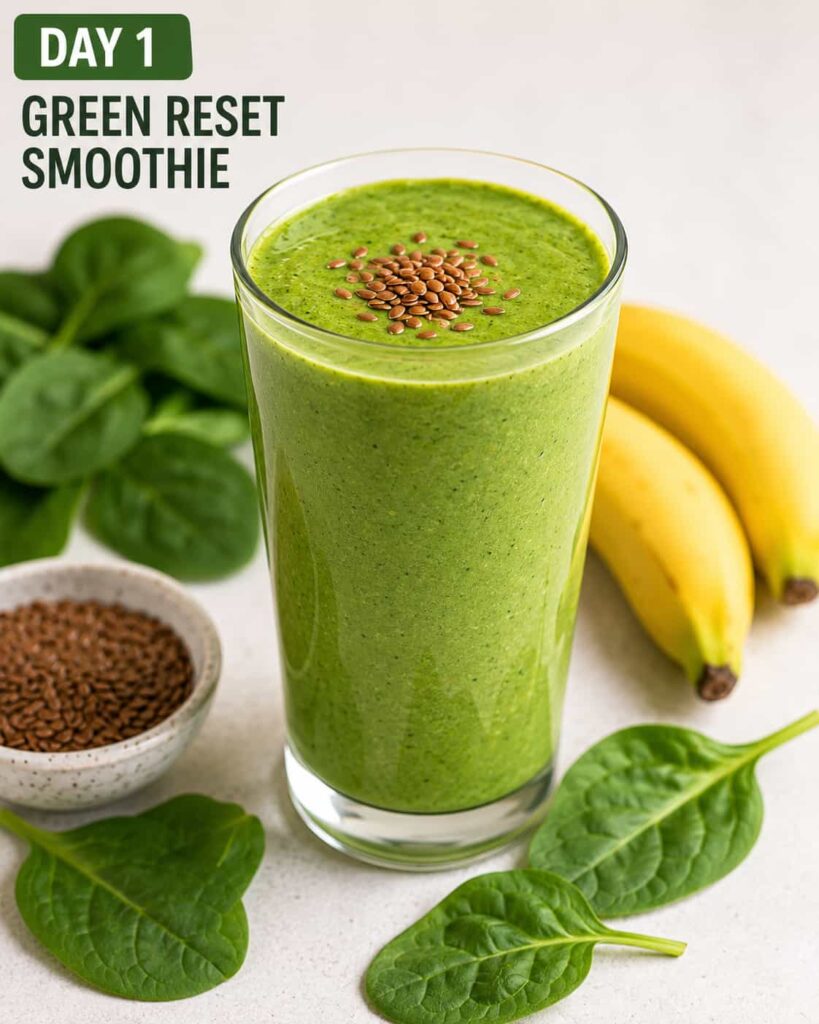
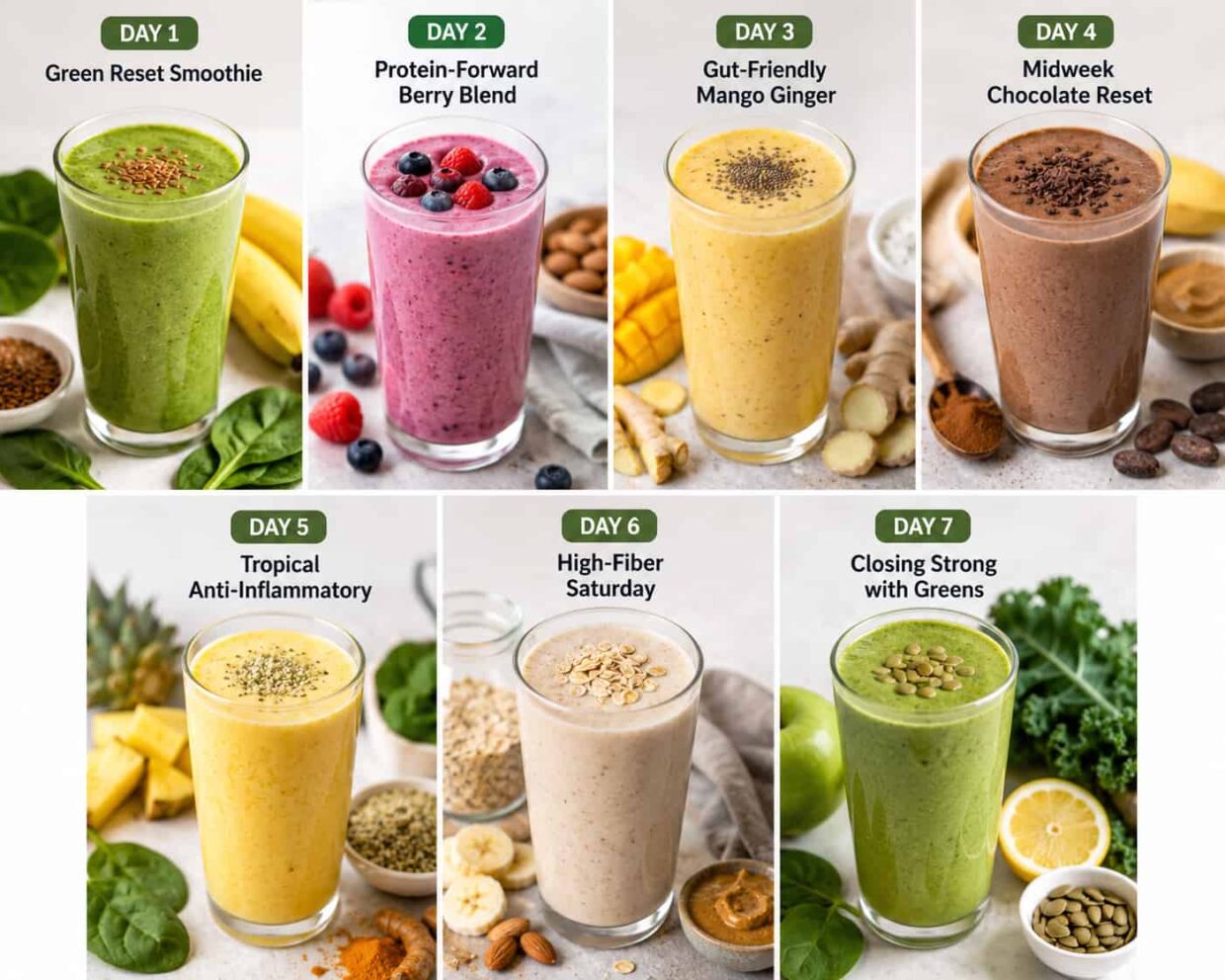
Day 1 — Green Reset
Morning smoothie: Blend 1 cup spinach, ½ frozen banana, ½ cup plain Greek yogurt, 1 tbsp flaxseed, and 1 cup unsweetened almond milk.
Why it works: Spinach is nearly calorie-free and rich in iron and folate. Flaxseeds add omega-3s and soluble fiber. Greek yogurt delivers around 10–12g protein per half cup.
Lunch: Grilled chicken with roasted vegetables and quinoa. Dinner: Lentil soup with a side of whole grain bread.
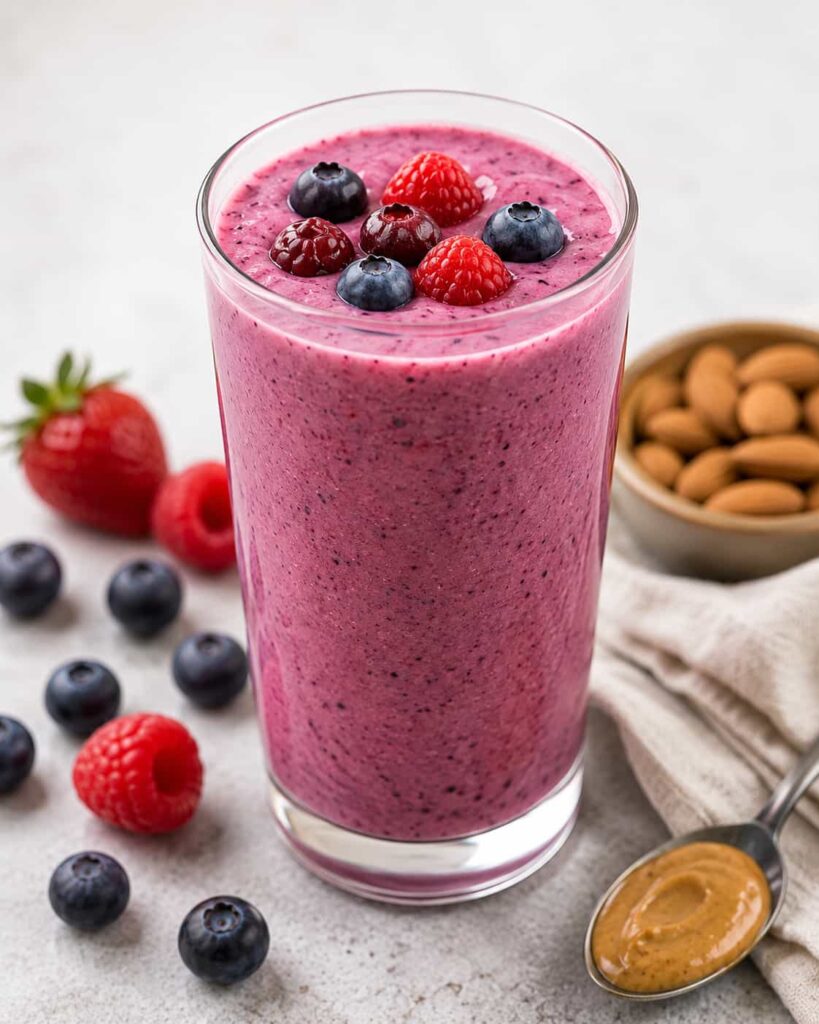
Day 2 — Protein-Forward Berry Blend
Morning smoothie: Blend ½ cup frozen mixed berries, 1 scoop vanilla protein powder, 1 tbsp almond butter, ½ tsp cinnamon, 1 cup unsweetened almond milk.
Why it works: Berries are among the lowest-sugar fruits you can use in low calorie smoothies — blueberries, raspberries, and strawberries are all high in antioxidants and relatively low on the glycemic index. Cinnamon may help stabilize blood sugar, though evidence is still emerging.²
Lunch: Large salad with chickpeas, olive oil dressing, and feta. Dinner: Baked salmon, steamed broccoli, brown rice.
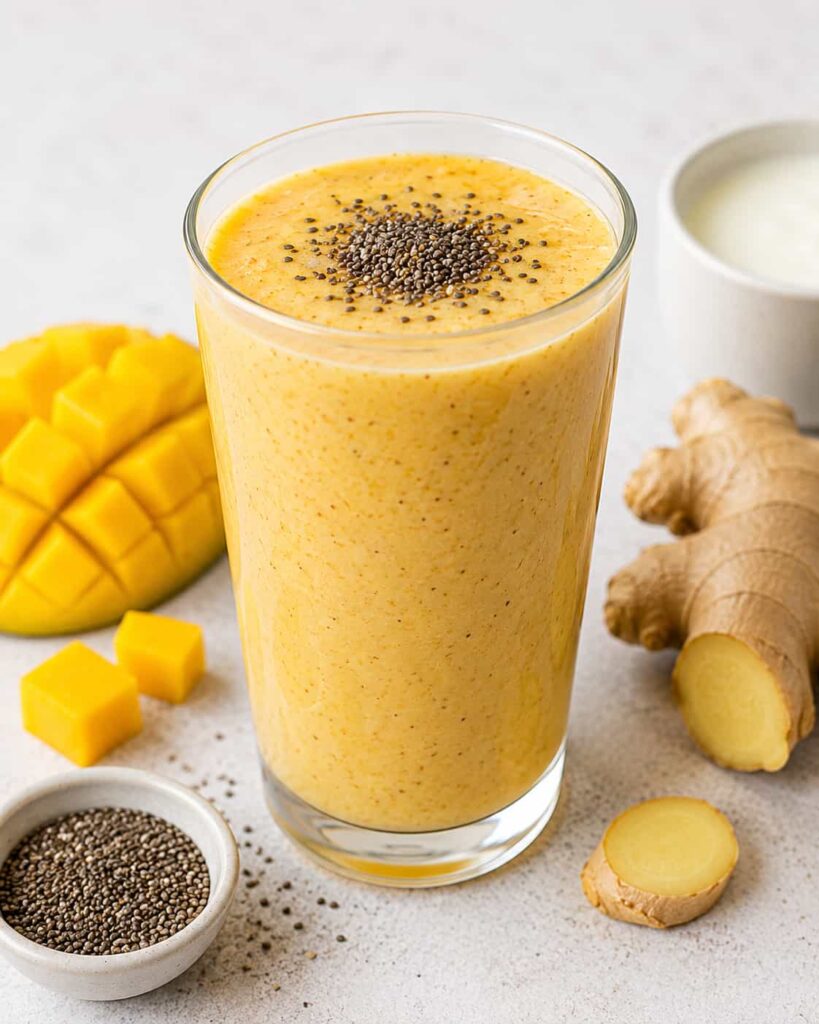
Day 3 — Gut-Friendly Mango Ginger- My Favourite
Morning smoothie: Blend ½ cup frozen mango, 1 cup kefir or plain yogurt, 1-inch fresh ginger, 1 tbsp chia seeds, ½ cup water.
Why it works: Kefir contains live probiotic cultures that support gut health — and emerging research suggests gut microbiome balance plays a role in weight regulation.³ Chia seeds expand in liquid, helping with satiety.
Lunch: Turkey wrap with avocado and lettuce in a whole wheat tortilla. Dinner: Stir-fried tofu with bok choy and brown rice noodles.
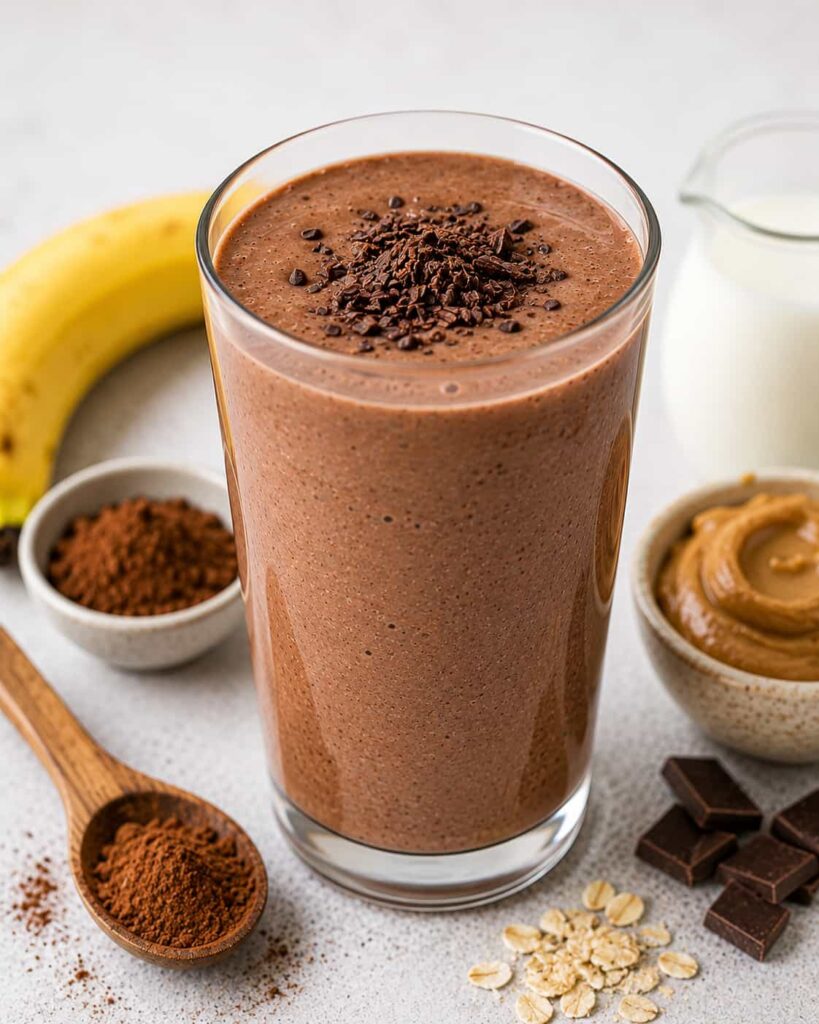
Day 4 — Midweek Chocolate Reset
Morning smoothie: Blend 1 tbsp unsweetened cocoa powder, 1 frozen banana, 1 cup unsweetened oat milk, 1 scoop chocolate protein powder, 1 tbsp peanut butter.
Why it works: This is a good reminder that smoothie recipes don’t have to taste like punishment. Unsweetened cocoa is rich in flavonoids and magnesium. Peanut butter adds healthy monounsaturated fat and helps control hunger through mid-morning.
Lunch: Egg salad on rye with sliced cucumber. Dinner: Grilled vegetables with hummus and whole-grain pita.
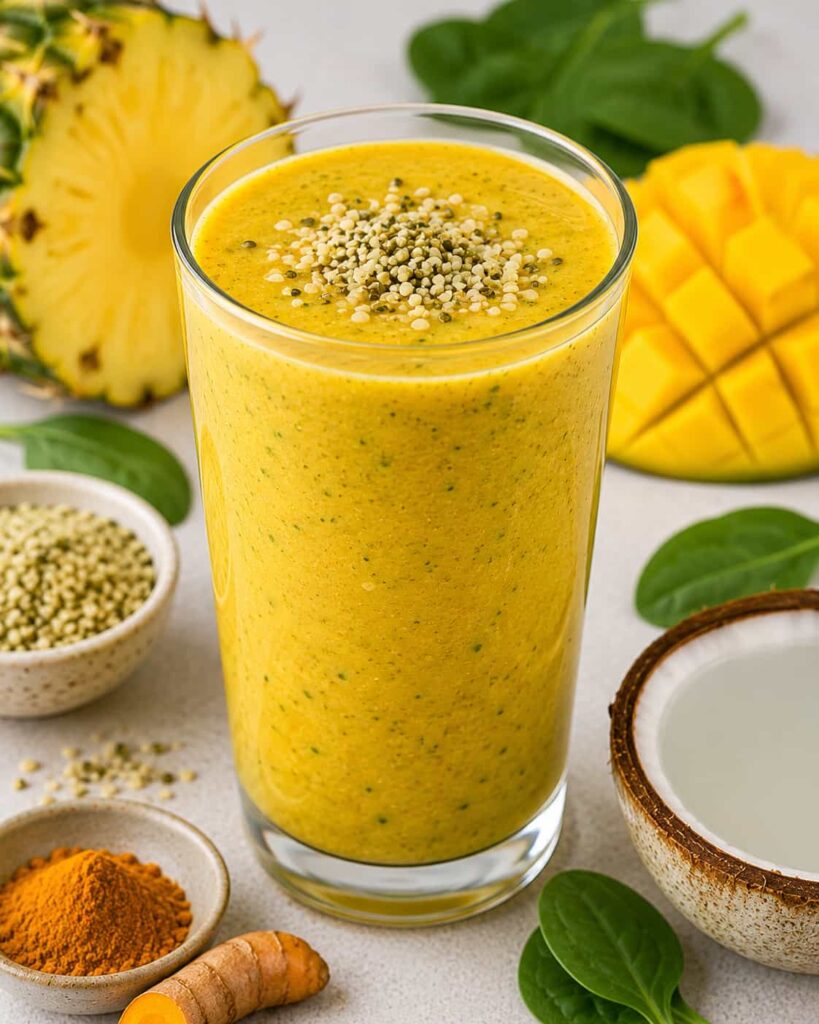
Day 5 — Tropical Anti-Inflammatory – Also Good For Skin
Morning smoothie: Blend ½ cup frozen pineapple, ½ cup frozen mango, 1 cup coconut water (unsweetened), 1 handful spinach, ½ tsp turmeric, 1 tbsp hemp seeds.
Why it works: Turmeric contains curcumin, which has been studied extensively for its anti-inflammatory properties — though you’d need to consume it consistently over time to see meaningful effects.⁴ Hemp seeds give you a complete amino acid profile, making this a decent plant-based protein option.
Lunch: Bean and vegetable soup. Dinner: Grilled chicken thighs with sweet potato and green beans.
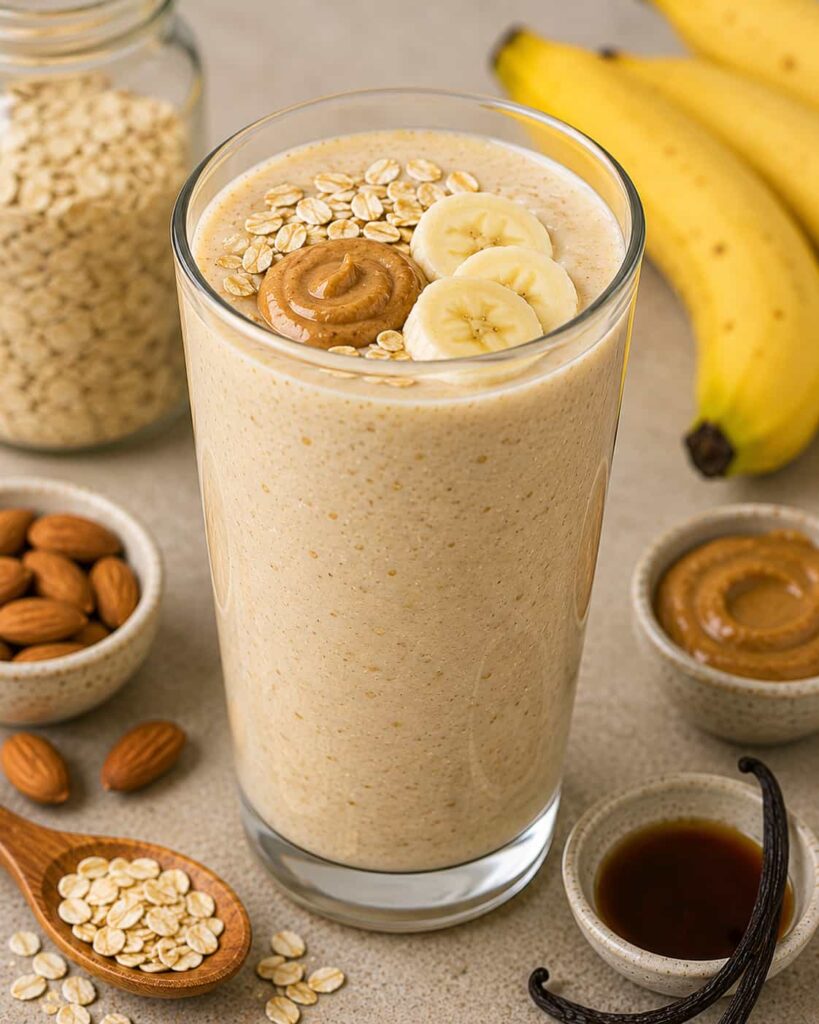
Day 6 — High-Fiber Saturday
Morning smoothie: Blend ½ cup rolled oats (soaked overnight), 1 cup unsweetened almond milk, 1 tbsp almond butter, ½ frozen banana, 1 tsp vanilla extract, pinch of sea salt.
Why it works: Oats are one of the best sources of beta-glucan — a soluble fiber shown to reduce LDL cholesterol and improve insulin sensitivity.⁵ This is essentially a drinkable overnight oat — filling, affordable, and simple.
Breakfast smoothie idea tip: Prep this the night before by soaking oats in the milk, then blend in the morning. Saves time and improves texture significantly.
Lunch: Grilled halloumi with roasted tomatoes and arugula. Dinner: Homemade vegetable curry with lentils.
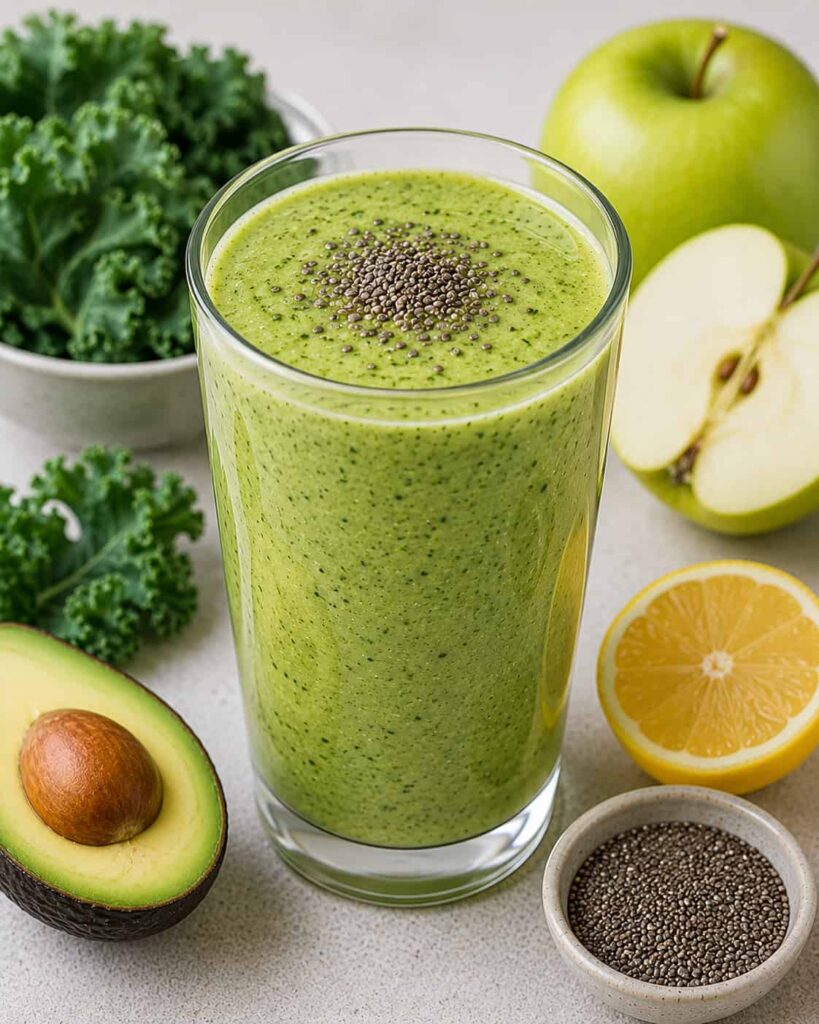
Day 7 — Closing Strong with Greens
Morning smoothie: Blend 1 cup kale (stems removed), ½ avocado, ½ green apple, juice of ½ lemon, 1 tbsp chia seeds, 1 cup cold water or coconut water.
Why it works: Avocado is one of those rare ingredients that works beautifully in breakfast smoothie ideas because it adds creaminess without sweetness. It also provides potassium, which many people are chronically low in — important for healthy blood pressure and muscle function.
Lunch: Tuna salad with olive oil, capers, and whole grain crackers. Dinner: Your choice — you’ve earned some flexibility. Keep it balanced.
General Tips to Get More From Your Smoothie Meal Plan
Don’t drink too fast. Chewing triggers satiety hormones more effectively than drinking. Sip slowly, or add thicker ingredients like frozen banana or oats so you’re almost “chewing” the smoothie.
Watch your portion sizes on bananas. A full large banana can add 120+ calories and a significant sugar load. Use half a frozen banana for texture without overdoing it.
Blend vegetables first. If you’re new to green smoothies, blend your greens with liquid first before adding other ingredients. You get a smoother texture and won’t end up with leafy chunks.
Avoid store-bought “smoothies.” Many commercial smoothie products — even from health-focused brands — contain added sugars, syrups, and preservatives that undermine your goals. Making your own gives you full control.
Stay hydrated separately. Smoothies contribute to hydration, but they don’t replace plain water. Aim for at least 6–8 cups of water throughout the day.
What to Expect After 7 Days
This 7-day smoothie weight loss diet plan is not a transformation protocol — and anyone who promises you dramatic results in one week is overstating the evidence. What you can realistically expect:
- Reduced bloating (from cutting processed foods and adding fiber)
- More consistent energy levels in the mornings
- A better sense of what full actually feels like
- Potentially 1–2 lbs of weight reduction, largely from reduced calorie intake and water retention
Long-term, sustainable weight loss requires consistent lifestyle changes — not 7-day fixes. Use this week as a reset, not a solution.
If you have a medical condition like diabetes, thyroid issues, or a history of disordered eating, consult a registered dietitian before making significant dietary changes.
Frequently Asked Questions
Can smoothies really help with weight loss?
Smoothies can support weight loss when they are built around whole, nutrient-dense ingredients — protein, fiber, and healthy fats. The problem is most store-bought or poorly made smoothies are just liquid sugar. A homemade smoothie with Greek yogurt, spinach, and chia seeds is a real meal. One with fruit juice, flavored yogurt, and honey is closer to a dessert. The ingredients decide everything.
How many smoothies should I drink per day for weight loss?
One meal-replacement smoothie per day is the most practical and sustainable approach. Replacing two meals with smoothies daily is possible short-term but harder to maintain and can leave nutritional gaps if not planned carefully. One solid smoothie in the morning or at lunch, paired with two balanced whole-food meals, works well for most people.
What is the best time to drink a smoothie for weight loss?
Morning is generally the best time — it sets your nutrition tone for the day, keeps you full through late morning, and reduces the chances of reaching for processed snacks before lunch. Some people prefer a smoothie at lunch instead, which works equally well. Avoid using smoothies as a late-night meal replacement as your body needs different nutrients for overnight recovery.
Can I lose weight in 7 days with a smoothie diet?
You can realistically reduce bloating, cut processed food intake, and create a moderate calorie deficit in 7 days. Expecting dramatic fat loss in one week is not realistic or supported by evidence. Most people notice lighter digestion, more stable energy, and possibly 1–2 lbs of reduction — much of which is water weight and reduced bloating rather than pure fat loss.
Related Posts You Might Find Helpfu
10 Best Fast Metabolism Drinks to Start Your Morning Right
Best Foods for Weight Loss (Science-Based List)
Evidence-Based Weight Loss Foods
The Complete Weight Loss Guide
References
¹ American Heart Association. Healthy Eating for a Healthy Weight. heart.org
² Costello, R.B., et al. (2016). The effectiveness of melatonin for promoting healthy sleep. Nutrition Journal. Note: Cinnamon and blood sugar — Medline Plus summary available at
³ Thursby, E., & Juge, N. (2017). Introduction to the human gut microbiota. Biochemical Journal. ncbi.nlm.nih.gov
⁴ Hewlings, S.J., & Kalman, D.S. (2017). Curcumin: A Review of Its Effects on Human Health. Foods. ncbi.nlm.nih.gov
⁵ Whitehead, A., et al. (2014). Cholesterol-lowering effects of oat β-glucan. American Journal of Clinical Nutrition. academic.oup.com

ISSA Certified Personal Trainer | Nutrition Specialist (Boston University)
Naithen Matthews is an ISSA-certified personal trainer and a nutrition graduate from Cornell University, with advanced graduate study (MS and PhD level work) in Nutrition & Metabolism focusing on nutrient metabolism, energy balance, chronic disease mechanisms, and obesity.
With over five years of experience in fitness coaching and more than two years of writing in the health and wellness space, Naithen specializes in metabolism, women’s health, weight management, and natural wellness. He is passionate about turning complex science into clear, practical guidance that anyone can understand.
Naithen’s work reflects strong E-E-A-T principles, combining real-world coaching experience with evidence-based nutrition knowledge to help readers make safe, informed, and confident health decisions.


Leave feedback about this