


If you’ve ever felt that losing weight is a different experience for women, you’re not imagining it. Between busy schedules, family responsibilities, and our unique body chemistry, the path to feeling healthier can sometimes feel confusing and full of conflicting advice.
This guide is here to change that. It’s not about a quick fix or a punishing routine. Instead, it’s a collection of simple, realistic habits that can help you build a healthier lifestyle that works for you. We’ll focus on sustainable changes that respect your body and your life. Remember, the goal is progress, not perfection. Let’s explore a kinder, more effective approach to women’s weight loss.
Why Women’s Bodies Are Unique
It’s true—women’s bodies often respond to diet and exercise differently than men’s. This isn’t a bad thing; it’s just biology. Factors like hormones, body composition (women naturally have more body fat which is essential for health), and metabolism can all play a role.
For example, hormonal fluctuations throughout the month can affect energy levels, appetite, and how your body holds onto water. Understanding this can help you be more patient and less frustrated when the scale naturally goes up and down. It’s not a sign of failure; it’s a sign you’re human.
Common Challenges in Women’s Weight Loss
Many women face similar hurdles on their health journey. Recognizing them is the first step to working with them.
Hormonal Changes: Fluctuations during your menstrual cycle, pregnancy, postpartum, and menopause can influence weight and appetite.
Metabolism: Women tend to have a slower resting metabolism than men, largely because they often have less muscle mass. This means your body may burn fewer calories at rest.
Stress and Emotional Eating: Juggling work, family, and life can lead to high stress levels. For many women, this can trigger cravings for comforting, high-calorie foods.
Putting Others First: It’s common for women to prioritize their family’s needs over their own, leaving little time or energy for meal prep or exercise.
It’s also important to remember that weight gain isn’t always just about lifestyle. Sometimes, underlying health conditions, such as thyroid issues, can make managing weight more challenging. If you notice rapid or unexplained weight gain, it is very important to consult a doctor for a check-up. Always follow your doctor’s guidance to ensure you are taking the safest and most effective approach for your personal health.
The good news is that by understanding these challenges, we can build a plan that is both gentle and effective.
Building Healthy and Sustainable Habits
Forget drastic overhauls. Lasting change is built on small, consistent habits. Here are some of the most powerful ones you can start with.
Nutrition Guidance & Portion Rules
You don’t need a complicated diet. The goal is balanced, nourishing meals that keep you full and satisfied.
A simple tool you can use anywhere is the plate method:
- Fill half your plate with non-starchy vegetables (like broccoli, spinach, bell peppers, or salad).
- Fill a quarter of your plate with lean protein (like chicken breast, fish, eggs, tofu, or lentils).
- Fill the remaining quarter with complex carbohydrates (like quinoa, brown rice, sweet potato, or whole-wheat pasta).
This method naturally helps with portion control without any counting. It ensures you get a balance of nutrients that can help keep your energy stable.
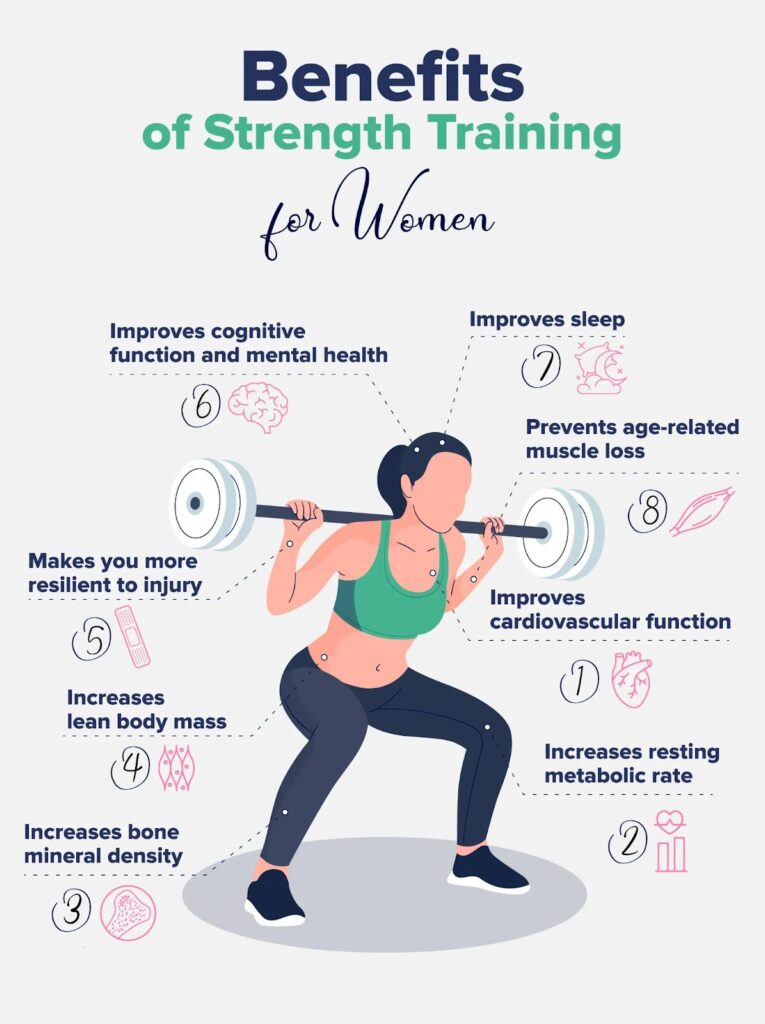
The Importance of Strength Training for Women
This is one of the most important weight loss tips for women. Many women worry that lifting weights will make them “bulky,” but this is a myth. Building lean muscle is incredibly beneficial because muscle is more metabolically active than fat. This means that having more muscle can help your body burn more calories, even when you’re sitting still.
You don’t need to lift heavy weights to start. Simple bodyweight exercises like squats, push-ups (on your knees is fine!), and glute bridges can make a big difference. Aim for 2-3 sessions per week.
Walking and Daily Movement
Never underestimate the power of walking. It’s free, gentle on your joints, and a fantastic way to clear your mind while supporting your women’s weight loss goals. Research consistently shows that regular walking can help with weight management and improve mood.
A great goal is to aim for a 20-30 minute walk most days. You can break this up—a 10-minute walk after breakfast and another after dinner. The key is consistent daily movement.
More: Weight Loss Tips For Office Workers
The Role of Sleep and Stress Management
If you’re not sleeping well or are constantly stressed, it can be very difficult to see results. Poor sleep can disrupt the hormones that control your appetite, making you feel hungrier. High stress can lead to emotional eating.
Prioritizing 7-8 hours of quality sleep and finding healthy ways to manage stress—like walking, deep breathing, reading, or talking to a friend—are not luxuries. They are essential parts of a healthy lifestyle.
Avoiding Liquid Calories
Sugary coffees, sodas, and even some fruit juices can add a significant amount of calories to your day without making you feel full. Swapping these for water, herbal tea, or black coffee can be one of the simplest and most effective changes you make.
The Power of Eating Slowly
It takes about 20 minutes for your brain to get the signal from your stomach that you’re full. When you eat quickly, it’s easy to overshoot and eat more than you need. Try to slow down. Put your fork down between bites, chew thoroughly, and enjoy the taste of your food. This simple act of mindful eating can help you feel more satisfied with less food.

Foods That Can Support Your Journey
Focus on adding in nourishing foods rather than just taking things away.
- Protein-Rich Foods: Foods like Greek yogurt, eggs, chicken, fish, beans, and lentils can help you feel full and support muscle repair, especially after strength training.
- Fiber-Filled Foods: Vegetables, fruits, and whole grains add bulk to your meals, which aids digestion and promotes a feeling of fullness.
- Healthy Fats: Don’t fear fat! Sources like avocado, nuts, seeds, and olive oil are important for hormone health and help you absorb vitamins. Just be mindful of portion sizes, as fats are calorie-dense.
A Sample 7-Day Healthy Kickstart Plan
This is a flexible template, not a strict diet. Use it for inspiration.
Monday: Breakfast – Scrambled eggs with spinach. Lunch – Large salad with grilled chicken. Dinner – Baked salmon with quinoa and roasted broccoli.
Tuesday: Breakfast – Greek yogurt with berries. Lunch – Leftover salmon and quinoa. Dinner – Turkey chili with lots of beans and vegetables.
Wednesday: Breakfast – Oatmeal with apple slices. Lunch – Whole-wheat wrap with hummus and veggies. Dinner – Stir-fry with tofu, bell peppers, and brown rice.
Thursday: Breakfast – Smoothie with spinach, banana, and protein powder. Lunch – Leftover stir-fry. Dinner – Lentil soup with a side salad.
Friday: Breakfast – Two hard-boiled eggs and a piece of fruit. Lunch – Tuna salad on whole-grain crackers. Dinner – Homemade pizza on a whole-wheat crust with lots of veggies.
Saturday: Breakfast – Whole-wheat pancakes with berries. Lunch – Leftover pizza. Dinner – Go out with friends or family, use the plate method to guide your choices.
Sunday: Breakfast – Greek yogurt parfait. Lunch – A “clean out the fridge” meal with all the week’s leftovers. Dinner – Chicken and vegetable skewers with a small sweet potato.
A Simple Daily Routine for a Busy Woman
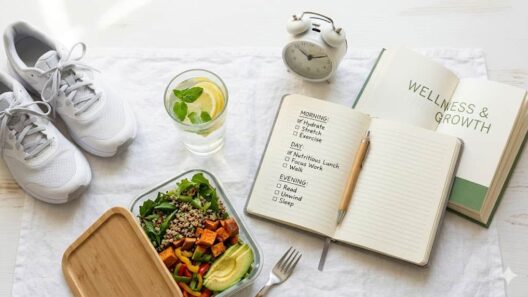
- Morning (7 AM): Wake up and drink a glass of water.
- Morning (7:30 AM): 15-minute bodyweight workout or a 20-minute walk.
- Morning (8 AM): Eat a protein-rich breakfast.
- Lunch (12 PM): Enjoy a lunch built around the plate method.
- Afternoon (3 PM): Go for a 5-10 minute walk to beat the afternoon slump.
- Dinner (6:30 PM): Have a balanced dinner, eating slowly and mindfully.
- Evening (9:30 PM): Start winding down for bed, aiming for 7-8 hours of sleep.
Mindset and Motivation
Your mental approach is just as important as the physical one.
Be Your Own Best Friend: Pay attention to your self-talk. If you have an off-day, speak to yourself with kindness, as you would a friend. Just get back on track with your next meal.
Celebrate Non-Scale Victories: The number on the scale is just one measure. Pay attention to having more energy, your clothes fitting better, feeling stronger, or sleeping more soundly. These are all signs of success.
Focus on Consistency, Not Perfection: You do not need to be perfect. Doing 80% of the plan well is far better than doing 100% perfectly for one week and then burning out.
It’s important to remember that nothing happens overnight. Weight loss is a continuous process, a journey that requires patience and consistency. You don’t need to be perfect every single day; you just need to keep moving forward consistently. And once you reach your goals, maintaining your new, healthier lifestyle often becomes much easier. The habits you’ve worked so hard to build become your new normal, allowing you to enjoy the healthy body you’ve achieved with ease.
Common Mistakes Women Make
Eating Too Little: Severely restricting calories can slow down your metabolism and lead to muscle loss, making it harder to lose weight in the long run.
Fear of Strength Training: As we discussed, building muscle is a key to boosting your metabolism.
Comparing Your Journey to Others: Your body is unique. What works for someone else may not work for you, and that’s okay. Focus on your own progress.
A Note on Women’s Weight Loss After 30 or 40
As women move through different life stages, their bodies change. It’s common to notice that losing weight might require a bit more attention to habits than it did in your 20s. This is often due to a natural, gradual loss of muscle mass and hormonal shifts.
The solution is not a crash diet, but a renewed focus on the fundamentals: strength training to preserve muscle, protein intake to support that muscle, and quality sleep to regulate hormones. The habits in this guide are especially powerful for supporting women over 30 weight loss.
A Small Message on Body Confidence
Health and weight loss are about feeling strong and vibrant, not about achieving a certain dress size. Your worth is not measured on a scale. This journey is about taking care of the body you have, listening to it, and nourishing it with respect. You are so much more than a number.
More: Weight Loss Foods
Additional Tips For Indian Women,s Weight loss
Simple Home-Based Strength for Indian Women
We understand that going to a gym may not be possible or preferred for many women in India due to customs, convenience, or cost. The wonderful news is that you can build strength effectively and privately right in your own home. You don’t need any fancy equipment; your own body weight and simple household items are perfect tools.
Forget the complex machines. Here are some simple, powerful exercises you can do:
Squats (Baithak): This is a natural movement. Stand with feet shoulder-width apart, lower your hips back and down as if you are sitting on an imaginary chair. Keep your chest up. Go as low as you comfortably can, then stand back up. This strengthens your legs and hips.
Wall Push-ups: Stand facing a wall. Place your hands on the wall, slightly wider than your shoulders. Slowly bend your elbows and bring your body closer to the wall, keeping your back straight. Push back to the start. This is great for your arms, chest, and shoulders.
Chair Dips: Use a sturdy chair or even your bed. Sit on the edge, place your hands next to your hips, and slide your bottom off. Lower your body by bending your elbows, then push back up. This tones the back of your arms.
Water Jug Lifts: Use a filled water bottle or a small matka (clay pot) as your weight. Hold it with both hands and practice lifting it from waist height to shoulder height. This mimics a dumbbell lift and works your shoulders.
Aim for 2-3 sessions per week. Even 15 minutes can make a significant difference in building metabolism-boosting muscle.
Affordable and Traditional Indian Foods for Weight Loss
You don’t need expensive “fancy diets” like avocado or quinoa to be healthy. India has a wealth of traditional, affordable, and highly nutritious foods that are perfect for supporting a healthy weight.
Powerful Proteins: Include dal, chana, rajma, moong, and chhole in your meals. These are excellent sources of plant-based protein and fiber that keep you full for a long time. Dahi (curd) and paneer are also fantastic and easily available options.
Wholesome Grains: Instead of only refined flour (maida), focus on whole wheat (gehu ka atta), jowar, bajra, ragi, and brown rice. These are complex carbohydrates that release energy slowly, preventing sudden hunger pangs.
Load Up on Sabzi: Fill half your plate with seasonal, local vegetables. Bhindi, lauki, tori, baingan, palak, and gajar are all affordable, filling, and packed with vitamins and fiber. Cook them with less oil.
Healthy Fats in Moderation: Use traditional oils like mustard oil, coconut oil, or groundnut oil in moderation. A handful of mungfali (peanuts) or seeds like til (sesame) are also great.
The problem in cities is often not the lack of fancy food, but the overconsumption of outside junk food, sugary drinks, and processed snacks. When you cook simple, balanced meals at home using these traditional ingredients, you are already taking a huge step towards better health.
Yeh yaad rakho: kuch bhi ek dum nahi hota. Weight loss ek continues process hai, ek journey hai. Isme patience aur consistency sabse zaroori hai. Aapko har din perfect rehne ki zaroorat nahi hai, bas consistently aage badhte rehna hai. Aur ek baar aap apne goals tak pahunch jaayein, toh wahan se cheezein maintain karna aur bhi easy ho jaata hai. Aapki healthy habits aapki doosri nature ban jaati hain, jisse aap apni mehnat se mili hui healthy body ko aasani se enjoy kar paate hain.
Conclusion
A healthy approach to women’s weight loss is built on a foundation of simple, sustainable habits. By focusing on nourishing foods, building strength, moving daily, and managing stress and sleep, you can create a lifestyle that supports your well-being for years to come. Start with one or two changes that feel manageable. Be patient and kind to yourself. You have the power to make positive changes that lead to healthy, realistic results.
FAQ’s
I don’t have time for long workouts. What can I do?
You don’t need long workouts to see benefits. Short, 15-20 minute sessions of bodyweight exercises at home can be very effective. Also, focus on adding movement throughout your day—take the stairs, park further away, or do a 10-minute walk during your lunch break. Consistency with short activities is more important than occasional long workouts.
Why do I feel hungrier at certain times of the month?
This is completely normal and is often related to hormonal changes in the days before your period. It’s your body’s way of asking for more energy. Instead of fighting the hunger, try to honor it with healthier choices. Reach for an extra portion of protein or complex carbs, like an apple with peanut butter or some Greek yogurt. This can help satisfy cravings without derailing your progress.
Is it harder for women to lose weight than men?
In general, yes, women can face more biological challenges due to factors like hormones and naturally higher body fat percentages. However, “harder” doesn’t mean “impossible.” It just means that a patient, consistent approach that includes strength training and balanced nutrition is especially important for women to see and maintain results.
Disclaimer
This content is for educational purposes only and is not medical advice. Always consult with a healthcare professional before starting any new diet or exercise program.
About Author
Hi, I’m Harsh — a normal person who enjoys learning about metabolism, weight management, and simple everyday health habits. I’m not a doctor or a certified expert. I read scientific articles, follow trusted medical sources, and study the latest research to understand health topics in a clear and practical way.
I created this blog to break down complex information into simple language so anyone can understand it without confusion. Everything I share comes from my own study, personal observations, and the reliable research I explore every day. My goal is to provide helpful, easy-to-read content that supports better lifestyle choices — not medical advice.
References & Further Reading
- Centers for Disease Control and Prevention (CDC). “Losing Weight.” https://www.cdc.gov/healthyweight/losing_weight/index.html
- Harvard T.H. Chan School of Public Health. “The Nutrition Source: Healthy Weight.” https://www.hsph.harvard.edu/nutritionsource/healthy-weight/
- Mayo Clinic. “Metabolism and weight loss: How you burn calories.” https://www.mayoclinic.org/healthy-lifestyle/weight-loss/in-depth/metabolism/art-20046508
- Academy of Nutrition and Dietetics (EatRight.org). “The Power of Protein.” https://www.eatright.org/health/essential-nutrients/protein/the-power-of-protein
- American Heart Association. “American Heart Association Recommendations for Physical Activity in Adults and Kids.” https://www.heart.org/en/healthy-living/fitness/fitness-basics/aha-recs-for-physical-activity-in-adults
- National Institutes of Health (NIH), News in Health. “The Benefits of Slumber.” https://newsinhealth.nih.gov/2013/04/benefits-slumber
- Cleveland Clinic. “Strength Training: The Secret to a Faster Metabolism.” https://health.clevelandclinic.org/strength-training-the-secret-to-a-faster-metabolism

ISSA Certified Personal Trainer | Nutrition Specialist (Boston University)
Naithen Matthews is an ISSA-certified personal trainer and a nutrition graduate from Cornell University, with advanced graduate study (MS and PhD level work) in Nutrition & Metabolism focusing on nutrient metabolism, energy balance, chronic disease mechanisms, and obesity.
With over five years of experience in fitness coaching and more than two years of writing in the health and wellness space, Naithen specializes in metabolism, women’s health, weight management, and natural wellness. He is passionate about turning complex science into clear, practical guidance that anyone can understand.
Naithen’s work reflects strong E-E-A-T principles, combining real-world coaching experience with evidence-based nutrition knowledge to help readers make safe, informed, and confident health decisions.